No matter the size of your organization, you may be among the 70% of nonprofit leaders currently experiencing burnout. There are many reasons leaders struggle, yet we often overlook one of the most obvious.
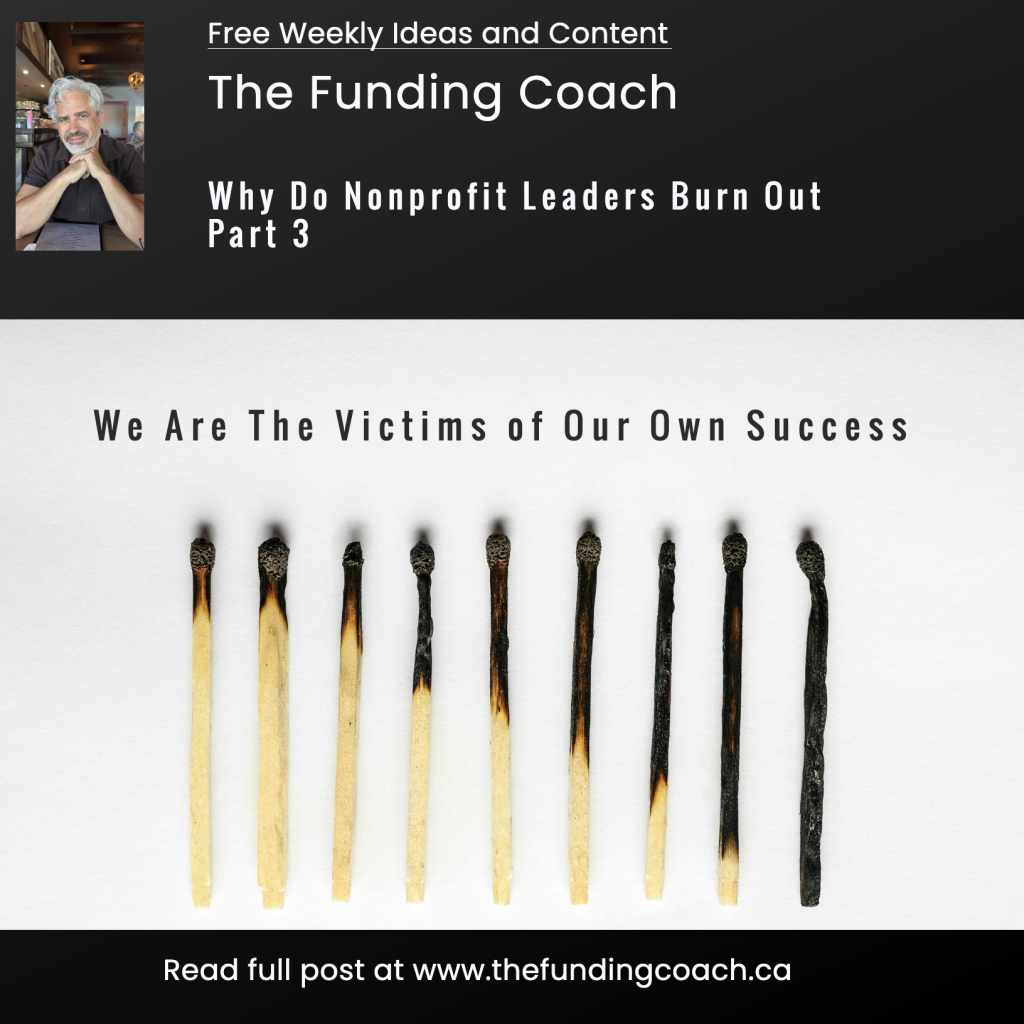
We can easily become victims of our own success. Nonprofit leaders are some of the most creative, committed, and hard-working people, which makes this cycle easier to fall into than you might expect.
In business, as you build a reputation for what you do well, it brings in more clients, and with them, more revenue. In the nonprofit world, as you become known for what you do well, it also brings in more clients, but ‘YOU’ must then find more funding to serve them.
This is the core of the problem: the cycle never ends. The better you are, the bigger the need, the bigger the cost.
Nonprofit leaders tend to be highly compassionate people. That compassion often leads to weak boundaries and difficulty saying no to those in need. Over time, this creates constant pressure to do more, serve more, and stretch further.
Eventually, leaders reach a place where the level of need exceeds their capacity and skill set to fund it. This leads to chronic stress, feelings of failure, and ultimately, burnout.
This is where new skills are required. As needs increase, income generation must change. Boundaries must change. Limits must be set.
These are not easy shifts to make alone. Leaders need space to talk, to share frustrations, and to have someone walk alongside them through the changes that are necessary.
You may be. Thinking about starting a new year may feel completely overwhelming.
As of this year, 95% of nonprofit leaders say burnout is a major concern, and 70% say they are currently experiencing burnout. What’s even more concerning is that, despite how high these numbers already are, they continue to rise.
The pressure on nonprofits is growing as community needs increase. People are struggling to afford food, find safe and affordable housing, pay for heat, and cover other essentials. The organizations trying to help are being stretched beyond their capacity.
I want to encourage you: it doesn’t have to stay this way. Yes, the needs may grow even larger next year, and your organization will still have to navigate how to respond. But with the right strategy and a clear plan, it is possible to reduce stress, lighten workloads, and prevent burnout.
I’ve had the privilege of leading several nonprofits, overseeing building projects, and being actively involved in creating new community centres. That work has been incredibly meaningful and rewarding.
At the same time, it came at a cost. I burned out. Recovery took years. The constant pressure, endless fundraising, ongoing worry, and stress eventually became too much. If you’re feeling this way, you are not alone. In fact, you’re in the majority.
As we head into a new year, I want to invite you to consider making a change. Ask for help. Seek encouragement. Find people you can talk to. Learn how to address your organization’s needs without sacrificing your sanity.
I help nonprofit leaders who are struggling by building long-term funding strategies and clear cases for support. My goal is to make your work easier, reduce pressure on you and your team, lighten your workload, prevent burnout, and help you serve your community more effectively.
If this resonates with you, let’s talk. Dave The Funding Coach
This is a bold statement, but I can usually tell the long-term viability of a nonprofit within a minute of meeting its director.
Most people look for the common qualities in a leader: their passion, commitment to the mission, and ability to bring in great volunteers and staff. These traits matter. No nonprofit can thrive without them. But here’s the truth most people overlook: those qualities alone don’t determine whether an organization will be sustainable for years to come.
I often talk about perseverance because running a nonprofit takes real work. There are long days, hard choices, and plenty of moments where you’re giving more time and energy than you ever expected. And building the relationships needed for major funding? That can take years, sometimes decades.
Still, even with passion and perseverance, there’s one quality that stands out above the rest when it comes to long-term success.
A few years ago, I spoke at a local college alongside several leaders from major nonprofits in our area. The students asked all the right questions; what we look for when hiring, what skills someone needs to work for or start a nonprofit, and how to prepare for the work ahead.
The panel offered a lot of great insight, but one common thread connected every director on that stage. I’ve worked with most of them over the years and it was evident they all share the same crucial skill: they understand money, what is needed to raise it, not just for the short term, but for the long term.
And this skill is surprisingly easy to overlook. If a director doesn’t have the business or entrepreneurial sense to understand and manage an organization’s financial needs, the nonprofit will almost certainly face serious challenges down the road, or fail completely. This is why it’s so important to have an honest conversation when hiring: Does our director have the business mindset needed to sustain our budget and our mission long-term? If they do not, it can lead to failure of the organization, or burnout of the director.
The good news is that these skills can be learned. Training helps. Coaching helps. Passion may get a nonprofit off the ground, but it’s strong business skills that help it grow, stabilize, and last.
If you’re ready to develop those skills, reach out to the Funding Coach. I’d be happy to help.
If you run a nonprofit, fundraising isn’t optional, it is in the job description. Raising money takes time, energy, and hustle. Let’s be honest: most of that hustle comes in the form of the dreaded ‘fundraiser.’
Car washes, auctions, bake sales, chocolate bars, work-a-thons, and more. The ideas are endless… and exhausting.
So here’s a one idea that most organizations miss: Give your fundraisers away. No, really.
Instead of running every event yourself, what if you encouraged others to do the heavy lifting for you? Imagine asking a business, community group, or even a group of passionate volunteers to organize a fundraiser on your behalf, and then simply hand you the proceeds.
Sounds dreamy, right? It’s also highly doable.
Many businesses already run charitable promotions, or events, so why not position your organization to be on their donation list? Imagine ten businesses, each hosting one event a year in your name. That’s ten fundraisers… without you planning a single one.
Help Them Help You
Get smart: don’t just ask, equip them. Give businesses and supporters a menu of fundraising ideas they can run on their own turf. Think:
-Casual Fridays with a donation jar
-Selling a special product with proceeds going to your cause
-Hosting a themed dance night or trivia night
-Placing a donation box at checkout
You can even encourage your existing supporters, volunteers, staff, and board members to take the idea into their workplaces, churches, book clubs, or community centers.
And the best part? You stay in control of your messaging. Provide flyers, posters, QR codes, and social media graphics. Make it easy for them to tell your story and drive traffic to your website or donation page.
Think Long-Term, Not One-Time
The real jackpot here is consistency. Once someone runs a successful fundraiser for you, ask if they’d consider making it an annual tradition. Becoming a “charity of choice” for a business or group means recurring income without you re-inventing the wheel each year.
Buildings cost money. They cost to build, maintain, heat, clean, staff—and that’s before you even account for the many unexpected expenses that always seem to arise. For many nonprofits, faith communities, and mission-driven groups, having a dedicated space is essential to fulfilling their purpose. But too often, the financial burden of owning or maintaining a building becomes overwhelming—draining resources, limiting impact, and in some cases, sinking the organization altogether.
It can feel like a never-ending struggle to cover these costs through donations, fundraisers, or offerings. And the truth is, it is never-ending—unless something changes.
Many groups have started finding creative solutions by reimagining how they use their space. Every building and situation is different, but almost every space holds untapped potential. These changes aren’t just about cutting costs—they’re also about expanding mission, deepening community connections, and creating new paths for impact.
Across the country, nonprofits and faith communities are turning their biggest expense into their greatest asset. Unfortunately, these conversations often don’t happen until an organization is in financial crisis—or not at all, which can lead to closure. But it doesn’t have to be that way.
Reimagining Your Space can:
Bring more of your community into your building
Attract like-minded partner groups to share space and resources
Create new funding opportunities and earned income streams
Make your space eligible for grant funding
Increase sustainability and long-term stability
Turn underused areas into vibrant, multi-use spaces
It is possible to have a building that pays for itself—or even generates surplus income. Yes, it takes intentional planning and work, but compared to the endless cycle of fundraising, it can be far more effective and empowering.
These are big conversations, but they’re worth having. If your organization, faith community, or nonprofit is interested in exploring how to Reimagine Your Space, let’s talk. I’d love to help you see the possibilities.
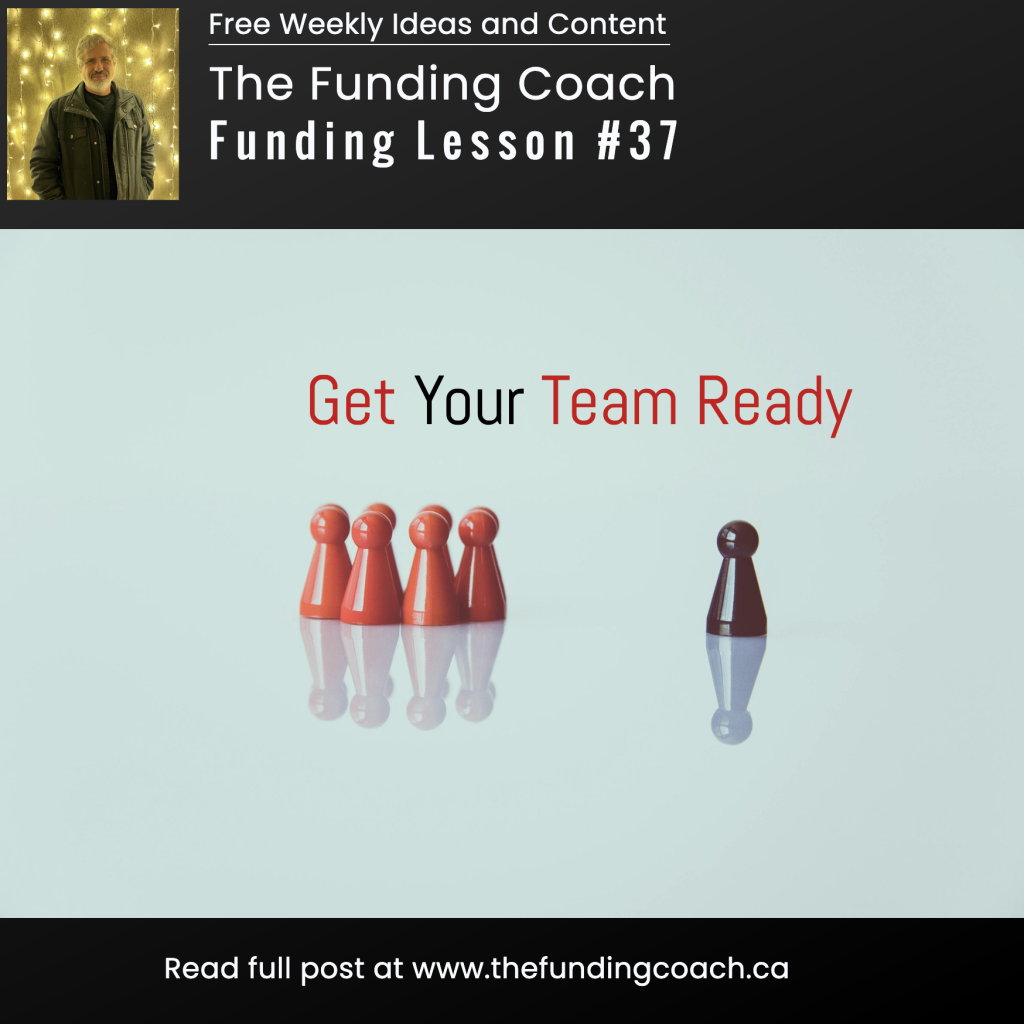
I’ve talked before about getting your team involved in fundraising. But depending on the size of your organization, your “team” might be just you—or it could include family, friends, volunteers, staff, or all of the above.
No matter the size or makeup of your team, you can increase your reach by equipping everyone with the right tools.
Start by keeping it simple. Give each person a clear, short list that includes:
What your organization needs
How they can help
How to give
This is the easiest way to multiply your message—by empowering others to share it again and again.
This approach works best when it’s:
Simple
Easy to remember
Easy for others to act on
So take a little time to share a clear ask and action plan with your team. Make sure they understand it and can communicate it confidently.
As your organization evolves, you may find that traditional community fundraisers are no longer enough to meet your growing financial needs. Does that mean it’s time to stop fundraising altogether? Absolutely not! The key is shifting the why and the how behind your fundraising efforts.
Here’s the truth: Fundraising is about so much more than just money—it’s about building a community that believes in your mission. Here are a few ideas on hot to transform your fundraising strategy:
Shift from just fundraising to Community-Building�Use your fundraisers as opportunities to build support for your cause. Get people involved — let them feel connected to your mission and become long-term advocates. It is also an opportunity to do sometime your whole team, volunteers, and clients who will all have to work together.
Involve people in your journey—let them see YOU�Your smaller fundraisers can be much more than a simple event—they can become gatherings that engage your community, raise awareness, and foster connections. People want to support something they believe in, but they also want to connect with the individuals behind the cause. Use fundraisers to share your story, your challenges, and your victories.
Expand your reach—both locally and digitally�Building community isn’t just about in-person connections; it’s about expanding your social media presence and connecting with a broader audience. You can use events to grow your social media reach by getting people to follow, engage with online content, contests, and more.��
Online fundraisers are also powerful tools, but they should be crafted in a way that encourages people to share them. Make your campaigns shareable by telling a compelling story, using visuals, and clearly explaining why your cause matters. Ask your supporters to spread the word—and make it easy for them by creating content they can easily share with their networks.
Done right, you can turn every fundraiser into a community event that drives awareness, engagement, and a real connection to your mission. By shifting your strategy, you’re not only raising funds but also creating a movement that brings people together for a common cause.
When it comes to fundraising, there is definitely not ‘one’ strategy will work for everyone. Why? Because the amount of money you need to raise will directly influence the type of fundraising efforts you pursue. Recognizing your need is the first step in determining your approach.
For instance, if you only need to raise $10,000 over the course of a year, you might be able to accomplish this with a few small events, some online campaigns, or one major fundraiser. A manageable goal allows for a less demanding strategy that can fit within the resources and time you have.
However, when the target shifts to $50,000 or more, suddenly you’re facing a much larger challenge. It may seem like you can simply multiply the number of fundraisers or increase the intensity of your efforts, but that approach can lead to burnout, frustration, and you likely won’t meet your goals. Asking your team to organize five times as many events isn’t sustainable.
This is when it’s time to change gears. If your budget demands larger amounts, you need to think different. You may need to explore new types of fundraising—perhaps corporate sponsorships, major donor programs, or larger-scale events. This shift often requires learning new skills, getting advice from experienced fundraisers, or even hiring an expert who can guide you toward new strategies.
The biggest mistake you can make is clinging to methods that simply aren’t effective for the scale of what you’re trying to achieve. Recognizing what you need and adjusting your approach accordingly will put you on the right path for success.
Let’s talk about how we can help you make the right shifts and scale your fundraising efforts effectively.