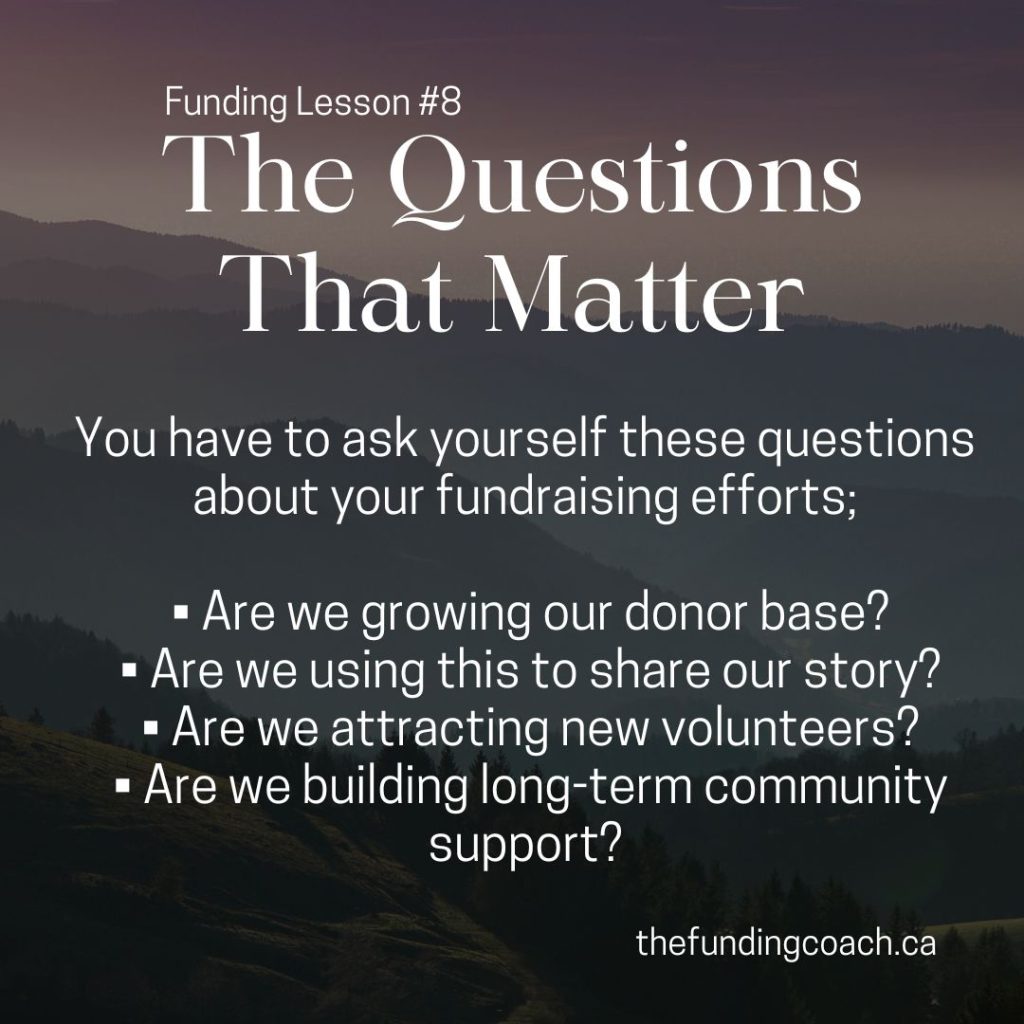
Fundraising is Opportunity
It shouldn’t just keep you going, it should help you grow.

Helping You Serve Your Community Better
Every nonprofit leader hears this question:
“How can I help?”
Very few are ready to answer it well.
If you want to turn interest into funding, volunteers, and long-term support, it starts with preparation.
#NonprofitLeadership
#FundraisingTips
#NonprofitStrategy
#nonprofit
#funding
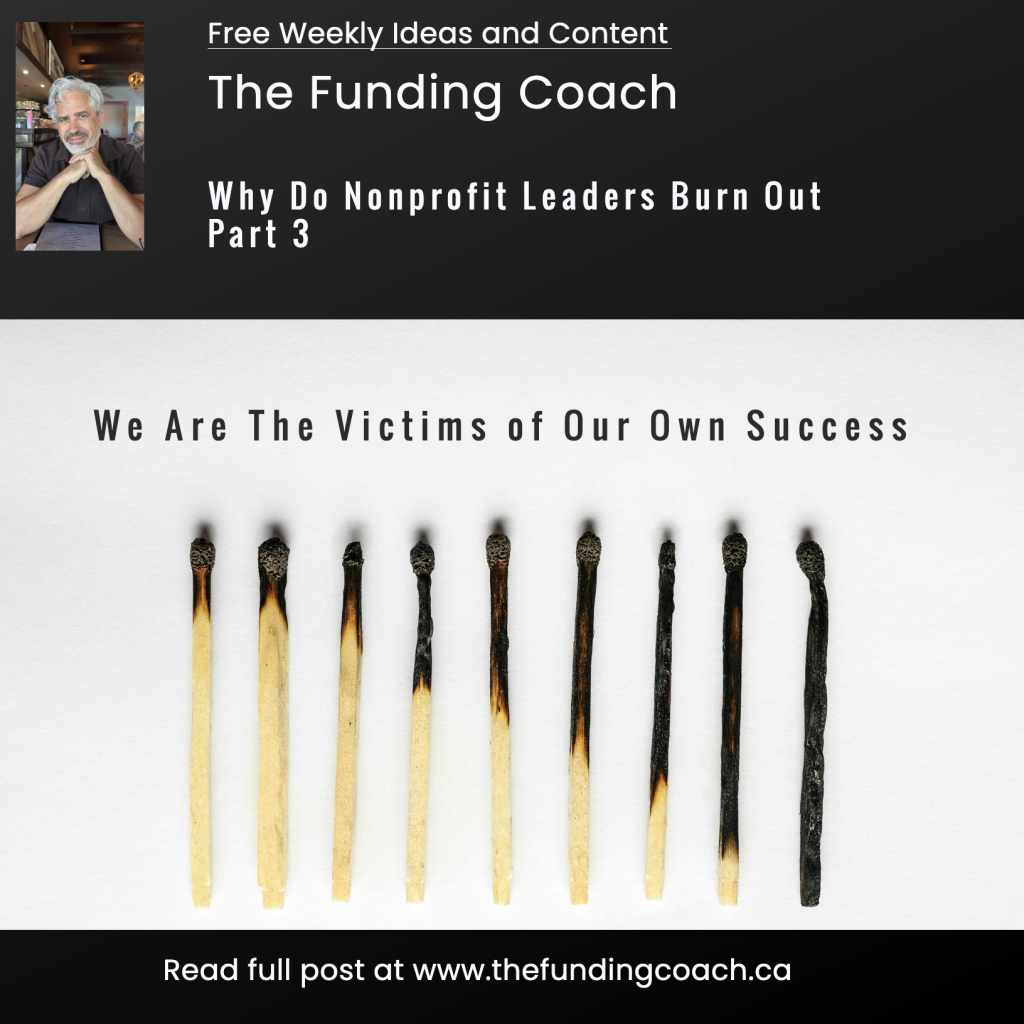
No matter the size of your organization, you may be among the 70% of nonprofit leaders currently experiencing burnout. There are many reasons leaders struggle, yet we often overlook one of the most obvious.
We can easily become victims of our own success. Nonprofit leaders are some of the most creative, committed, and hard-working people, which makes this cycle easier to fall into than you might expect.
In business, as you build a reputation for what you do well, it brings in more clients, and with them, more revenue. In the nonprofit world, as you become known for what you do well, it also brings in more clients, but ‘YOU’ must then find more funding to serve them.
This is the core of the problem: the cycle never ends. The better you are, the bigger the need, the bigger the cost.
Nonprofit leaders tend to be highly compassionate people. That compassion often leads to weak boundaries and difficulty saying no to those in need. Over time, this creates constant pressure to do more, serve more, and stretch further.
Eventually, leaders reach a place where the level of need exceeds their capacity and skill set to fund it. This leads to chronic stress, feelings of failure, and ultimately, burnout.
This is where new skills are required. As needs increase, income generation must change. Boundaries must change. Limits must be set.
These are not easy shifts to make alone. Leaders need space to talk, to share frustrations, and to have someone walk alongside them through the changes that are necessary.
Let’s take some time to talk.

I love people who make things happen.They create systems and organizations to better their community. They feel deeply responsible for the mission. They will do anything to keep things going……Yes almost anything. Sacrifice time, family, health, sanity. This is not sustainable.
In many ways, we become victims of our own success. The better we do at fulfilling our mission, the more the community asks us to help. The need never stops. There is always more to do.
Add to this the growing economic struggles we’re seeing everywhere. The number of individuals and families needing help continues to rise, creating yet another layer of pressure. You know it’s not just about maintaining what you’re doing heading into 2026, you already know you’ll be expected to do more.
The reason you’re in your position is because you care. You want to help. You want to make a difference in the place you serve. People with high levels of compassion often end up working in nonprofits, faith groups, and community organizations.
What makes leading a nonprofit especially stressful is that the most compassionate, community-minded people are often asked to do work they were never trained or equipped to do. Most nonprofit leaders end up becoming fundraisers, or what I call “money entrepreneurs” by necessity, not by choice.
For example, in college I learned how to run youth programs. No one ever taught us how to pay for those programs, how to fund staff positions, cover salaries, or build sustainable funding models.
So here you are. You’re being asked to do something you may have zero training for. You’re being asked to do more of it. And everyone is depending on you.
That’s stress.
And this is a big reason why 95% of nonprofit leaders say burnout is a major concern, and 70% say they are currently experiencing burnout.
This is also why I now help leaders in nonprofits, faith groups, and community organizations develop the skills they need to sustain their work. For over 25 years, I worked in organizations that relied on constant funding, from donors, offerings, grants, and government sources.
I personally carried the weight of raising hundreds of thousands of dollars each year, and millions for large projects. I burned myself out doing it.
What’s changed? I now focus my time on the things that produce the greatest results, and I’ve learned to let a lot of things go.
If all of this sounds way to familiar, I would love to talk with you.
To be a place where you can be encouraged. A place where you can voice your stress. And together, we can discover ways to help your organization thrive, while you get your life back.
Dave
The Funding Coach

You may be. Thinking about starting a new year may feel completely overwhelming.
As of this year, 95% of nonprofit leaders say burnout is a major concern, and 70% say they are currently experiencing burnout. What’s even more concerning is that, despite how high these numbers already are, they continue to rise.
The pressure on nonprofits is growing as community needs increase. People are struggling to afford food, find safe and affordable housing, pay for heat, and cover other essentials. The organizations trying to help are being stretched beyond their capacity.
I want to encourage you: it doesn’t have to stay this way.
Yes, the needs may grow even larger next year, and your organization will still have to navigate how to respond. But with the right strategy and a clear plan, it is possible to reduce stress, lighten workloads, and prevent burnout.
I’ve had the privilege of leading several nonprofits, overseeing building projects, and being actively involved in creating new community centres. That work has been incredibly meaningful and rewarding.
At the same time, it came at a cost. I burned out. Recovery took years. The constant pressure, endless fundraising, ongoing worry, and stress eventually became too much. If you’re feeling this way, you are not alone. In fact, you’re in the majority.
As we head into a new year, I want to invite you to consider making a change. Ask for help. Seek encouragement. Find people you can talk to. Learn how to address your organization’s needs without sacrificing your sanity.
I help nonprofit leaders who are struggling by building long-term funding strategies and clear cases for support. My goal is to make your work easier, reduce pressure on you and your team, lighten your workload, prevent burnout, and help you serve your community more effectively.
If this resonates with you, let’s talk.
Dave
The Funding Coach
www.facebook.com/thefundingcoachonline/
www.thefundingcoach.ca

Funding Lesson #31 – Build Long Term Funding
Running a nonprofit is no small feat—it takes resources, dedicated staff, and unwavering commitment to serve our communities. But here’s the challenge: most funding opportunities focus on short-term projects, leaving core operating costs in the shadows.

To truly thrive, nonprofits need to prioritize long-term funding strategies. Here are a few ideas to help you secure that vital support:
Pursue Multiyear Funding Grants: Yes, they require more effort, but the payoff is immense. Having a reliable funding source for several years allows you to build sustainable programs and retain your talented staff.
Create Long-Term Giving Options: Whether on your donation platform or at events, offer donors the chance to commit to long-term support. It fosters deeper relationships and ensures your mission continues to flourish.
Educate Your Donors: Make it a core part of your strategy to inform donors and the public about your organization’s biggest needs. Transparent communication about the importance of core funding can turn one-time givers into long-term supporters.
By focusing on these long-term funding strategies, you can alleviate the stress of constant fundraising, allowing you to concentrate on what truly matters—creating lasting impact in your community.
Remember, a reliable income stream not only helps you plan for the future but also empowers you to fulfill your mission without constant worry. Let’s work together to make sustainable funding a reality! For more visit www.thefundingcoach.ca
The majority of nonprofits receive their largest donations in December, with giving steadily increasing throughout the fall and peaking at year-end. This surge is driven by both charitable and tax-related reasons. Many nonprofits ramp up their community support and do extra work during the holidays, inspiring others to give. Additionally, those seeking income tax receipts often choose to donate more, knowing they’ll benefit from tax deductions.

Since the coming months are often the most generous for donors, it makes perfect sense to create a plan to maximize this opportunity. There are various methods to boost donations, from online campaigns to in-person events—choose what works best for your organization.
Here are a few ideas to consider, regardless of the type of plan you create:
Leverage the Charitable Season
This is a time when many people feel the desire to help others and do something meaningful. Provide clear, practical ways for them to give through your organization. Explain how their contribution can make a difference in a simple and direct manner.
Create an Online Gift Board
Promote a “gift board” through social media and at your events. For example, if your organization feeds families during the holidays, create links or buttons that allow donors to “Feed a Family.” You can also offer options to feed multiple families (e.g., “Feed Five” or “Feed Ten”). This approach makes the donation tangible, visual, and easy to complete.
Encourage Long-Term Giving
Extend the holiday giving spirit into the new year by offering donors the opportunity to support your programs year-round. For instance, if your nonprofit provides services to kids, youth, families, or seniors, offer an option to cover both holiday and year-long support, such as meals, recreation, or transportation. Framing this as a meaningful holiday gift to a family can resonate deeply with donors.
No matter which strategy you pursue, start now. Many individuals and businesses are already planning their end-of-year giving, so it’s essential to engage in those conversations early.
For more ideas and guidance, contact The Funding Coach at www.thefundingcoach.ca.
For many nonprofits and community groups, securing government grants and foundation support is essential. However, the process of completing applications, understanding eligibility requirements, and crafting proposals for uncertain funding can be overwhelming.
To enhance your chances of success, consider the following approach:
Every organization has its own goals and mission, both for the present and the future. When seeking a grant or writing a proposal, you typically present these objectives. Essentially, you’re asking another organization or level of government to invest their resources to help achieve your goals. This approach is standard practice.
However, this method often overlooks a crucial factor: foundations and governments allocate funds to advance their own objectives. Understanding this can transform how you approach funding requests.
For instance, in my province, the government has a stated goal of reducing child poverty. Knowing this, when proposing a project aimed at benefiting children, youth, or families, I would highlight how the project aligns with the government’s goal of reducing child poverty. By demonstrating that investing in your project contributes to their objectives, you create a mutually beneficial situation. Your success in meeting your goals translates to their success in achieving theirs.
You don’t need to alter your organization’s mission to align with this strategy. Instead, focus on identifying funding opportunities and grants that support your mandate while also addressing broader community goals, such as enhancing community health.
Do this and increase your level of success. For more info, help with applying for grants, or writing funding proposals please contact the funding coach.
🌟 Embrace the Power of Advocacy in Fundraising 🌟
Fundraising is a realm where passion meets purpose, and the journey to becoming an exceptional fundraiser begins with a profound understanding of advocacy. In my journey through the world of fundraising, I’ve encountered two significant roadblocks that many individuals face – the courage to ask for substantial amounts and the discomfort in seeking support for personal endeavors within the nonprofit sector.
I vividly recall a meeting with multiple funders, and a colleague asked, “How can you boldly request such significant contributions?” The figures discussed seemed overwhelming, prompting a search for the source of my confidence. Was it experience, audacity, or something else entirely? The answer lies in the power of advocacy, which I’m about to share.
The second challenge pertains to those working in nonprofit organizations, charities, and faith communities who need to raise funds not just for their programs but also for their salaries. Many individuals have expressed discomfort in asking for money for themselves, viewing it as awkward, intimidating, or even morally conflicting when they are, in fact, raising funds for a mission that means the world to them.
The solution may seem obvious – you are an integral part of the mission, and it cannot function without your dedication and effort. You are the very embodiment of the mission’s purpose, its hands, and its feet. However, the discomfort persists.
To address these issues, I invited a person close to us to share their personal experience with our organization and the profound impact it had on their lives. Their heartfelt story touched everyone present, reaffirming the purpose in our work. Then, I posed a question to all: “Would you be willing to ask a donor to help someone in a similar situation?” Inspired by the moving testimony, the unanimous response was “yes.”
The key lies in recognizing that you are an advocate, not just for yourself but for the mission you represent. This shift in perspective is the cornerstone of becoming an extraordinary fundraiser. It’s when you become the voice that stands before others, passionately seeking their support to make a difference in the lives of those you care about.
While the discomfort of asking for funds, including salaries, may never completely dissipate, we can find comfort in standing up for others. This is the essence of advocacy. It empowers you to be bold, ask for help, and share your vision because you’re the bridge between compassion and action. You stand in the gap to represent the very essence of what your mission stands for.
Let advocacy be your guiding principle in fundraising, and it will revolutionize how you perceive and practice this art. Your unwavering passion and commitment will draw people to the table, inspiring them to invest, engage, and join in the mission.
In the world of fundraising, be the advocate who lights the way for change and compassion.