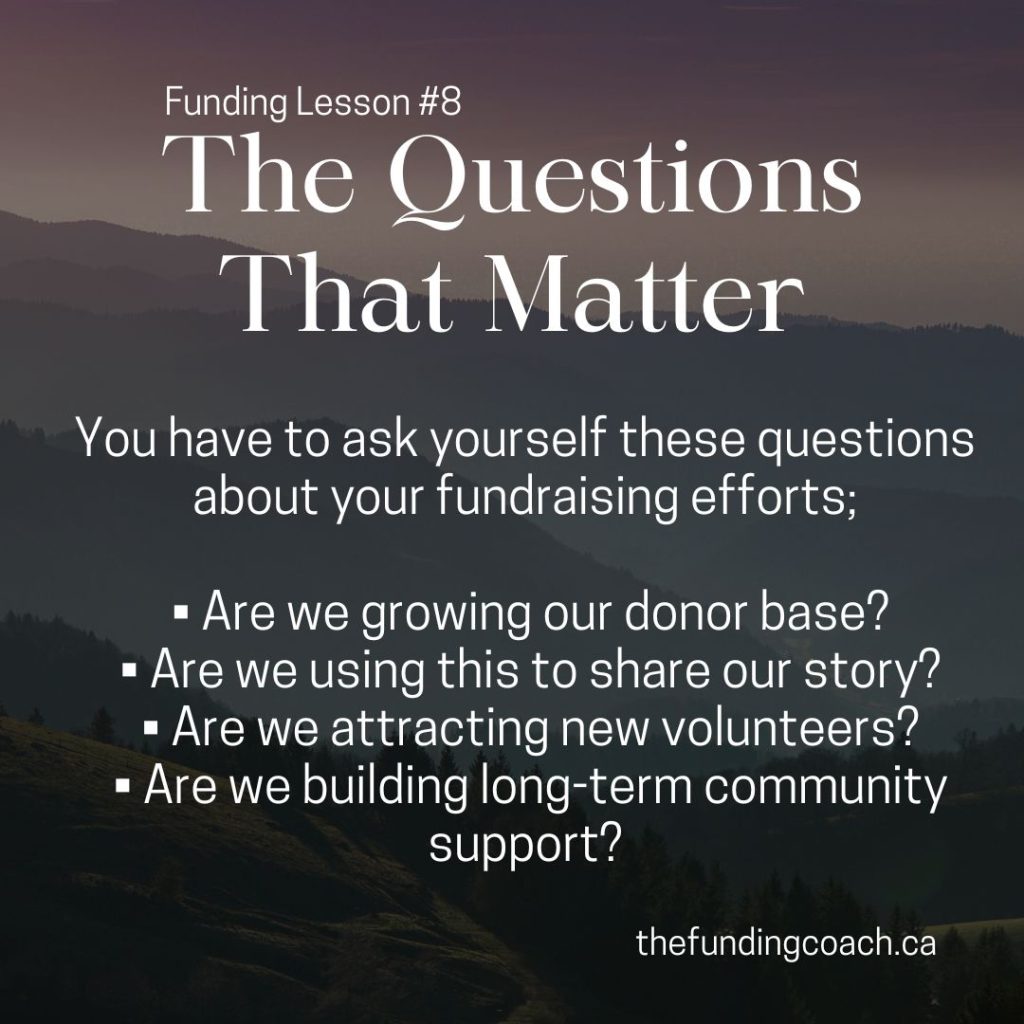
Fundraising is Opportunity
It shouldn’t just keep you going, it should help you grow.

Helping You Serve Your Community Better
You’re responsible for people, programs, and promises.Your funding strategy should protect all three.
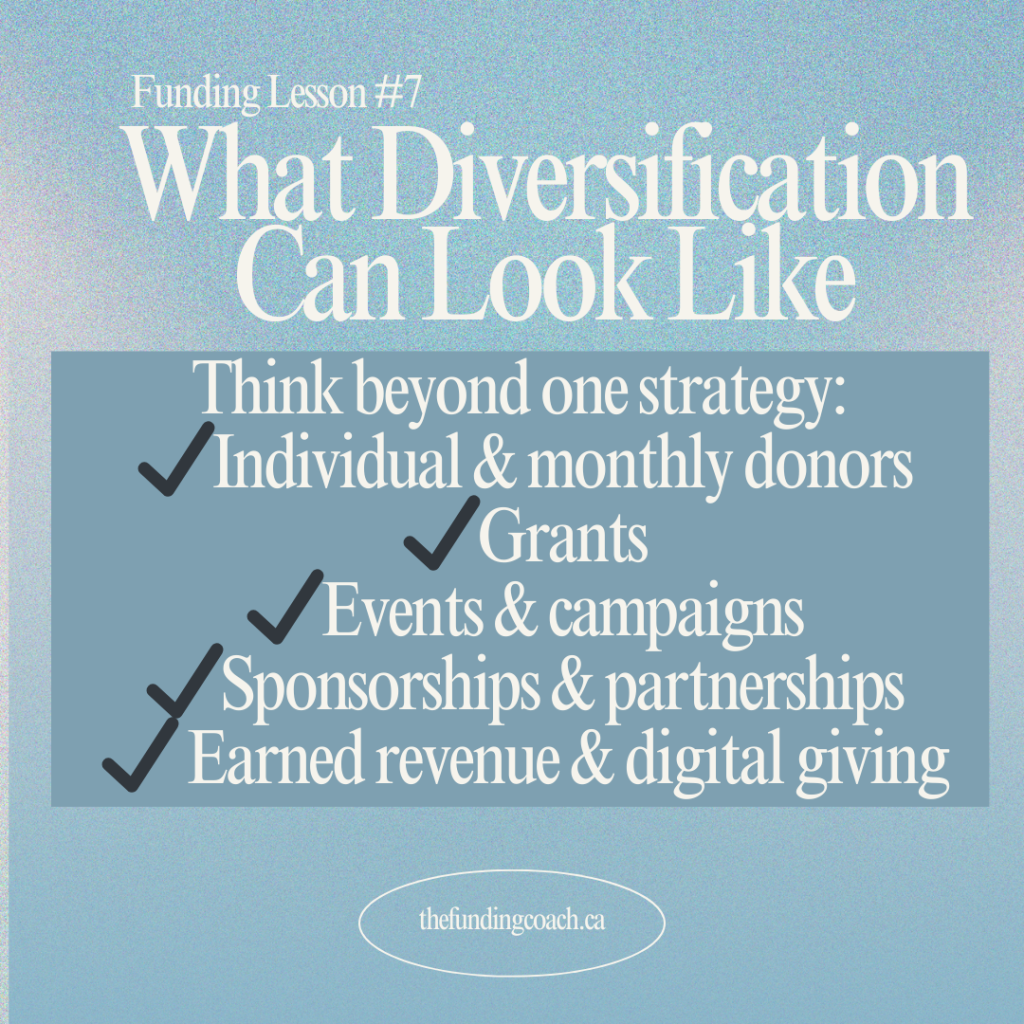
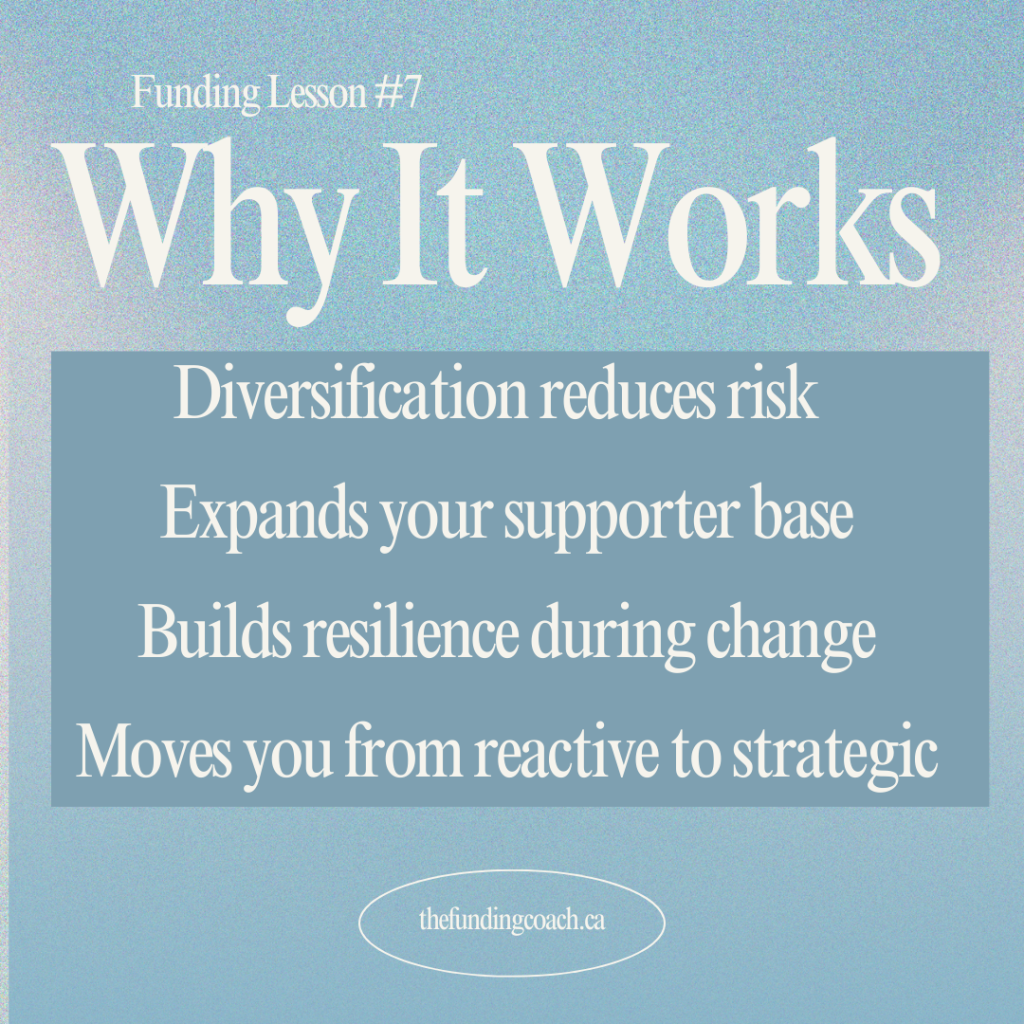
Every nonprofit leader hears this question:
“How can I help?”
Very few are ready to answer it well.
If you want to turn interest into funding, volunteers, and long-term support, it starts with preparation.
#NonprofitLeadership
#FundraisingTips
#NonprofitStrategy
#nonprofit
#funding
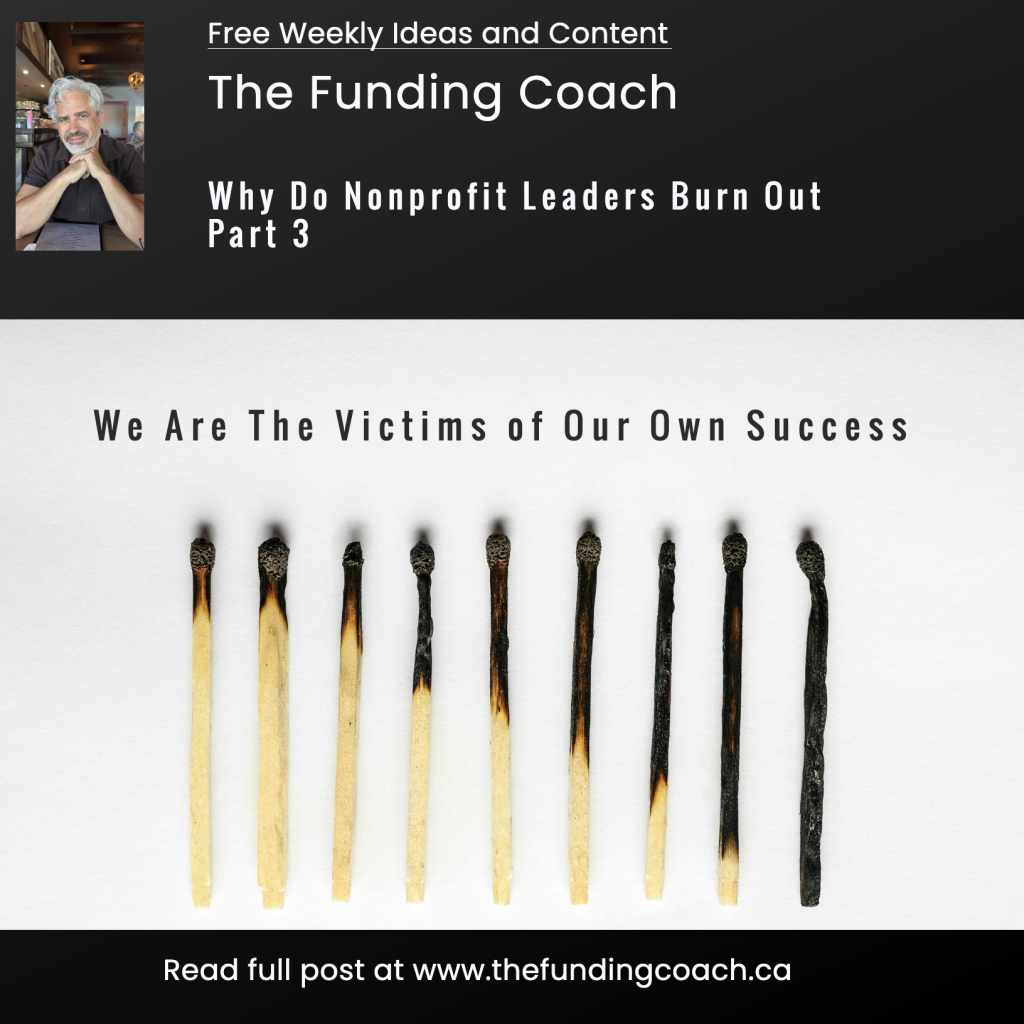
No matter the size of your organization, you may be among the 70% of nonprofit leaders currently experiencing burnout. There are many reasons leaders struggle, yet we often overlook one of the most obvious.
We can easily become victims of our own success. Nonprofit leaders are some of the most creative, committed, and hard-working people, which makes this cycle easier to fall into than you might expect.
In business, as you build a reputation for what you do well, it brings in more clients, and with them, more revenue. In the nonprofit world, as you become known for what you do well, it also brings in more clients, but ‘YOU’ must then find more funding to serve them.
This is the core of the problem: the cycle never ends. The better you are, the bigger the need, the bigger the cost.
Nonprofit leaders tend to be highly compassionate people. That compassion often leads to weak boundaries and difficulty saying no to those in need. Over time, this creates constant pressure to do more, serve more, and stretch further.
Eventually, leaders reach a place where the level of need exceeds their capacity and skill set to fund it. This leads to chronic stress, feelings of failure, and ultimately, burnout.
This is where new skills are required. As needs increase, income generation must change. Boundaries must change. Limits must be set.
These are not easy shifts to make alone. Leaders need space to talk, to share frustrations, and to have someone walk alongside them through the changes that are necessary.
Let’s take some time to talk.

I love people who make things happen.They create systems and organizations to better their community. They feel deeply responsible for the mission. They will do anything to keep things going……Yes almost anything. Sacrifice time, family, health, sanity. This is not sustainable.
In many ways, we become victims of our own success. The better we do at fulfilling our mission, the more the community asks us to help. The need never stops. There is always more to do.
Add to this the growing economic struggles we’re seeing everywhere. The number of individuals and families needing help continues to rise, creating yet another layer of pressure. You know it’s not just about maintaining what you’re doing heading into 2026, you already know you’ll be expected to do more.
The reason you’re in your position is because you care. You want to help. You want to make a difference in the place you serve. People with high levels of compassion often end up working in nonprofits, faith groups, and community organizations.
What makes leading a nonprofit especially stressful is that the most compassionate, community-minded people are often asked to do work they were never trained or equipped to do. Most nonprofit leaders end up becoming fundraisers, or what I call “money entrepreneurs” by necessity, not by choice.
For example, in college I learned how to run youth programs. No one ever taught us how to pay for those programs, how to fund staff positions, cover salaries, or build sustainable funding models.
So here you are. You’re being asked to do something you may have zero training for. You’re being asked to do more of it. And everyone is depending on you.
That’s stress.
And this is a big reason why 95% of nonprofit leaders say burnout is a major concern, and 70% say they are currently experiencing burnout.
This is also why I now help leaders in nonprofits, faith groups, and community organizations develop the skills they need to sustain their work. For over 25 years, I worked in organizations that relied on constant funding, from donors, offerings, grants, and government sources.
I personally carried the weight of raising hundreds of thousands of dollars each year, and millions for large projects. I burned myself out doing it.
What’s changed? I now focus my time on the things that produce the greatest results, and I’ve learned to let a lot of things go.
If all of this sounds way to familiar, I would love to talk with you.
To be a place where you can be encouraged. A place where you can voice your stress. And together, we can discover ways to help your organization thrive, while you get your life back.
Dave
The Funding Coach

You may be. Thinking about starting a new year may feel completely overwhelming.
As of this year, 95% of nonprofit leaders say burnout is a major concern, and 70% say they are currently experiencing burnout. What’s even more concerning is that, despite how high these numbers already are, they continue to rise.
The pressure on nonprofits is growing as community needs increase. People are struggling to afford food, find safe and affordable housing, pay for heat, and cover other essentials. The organizations trying to help are being stretched beyond their capacity.
I want to encourage you: it doesn’t have to stay this way.
Yes, the needs may grow even larger next year, and your organization will still have to navigate how to respond. But with the right strategy and a clear plan, it is possible to reduce stress, lighten workloads, and prevent burnout.
I’ve had the privilege of leading several nonprofits, overseeing building projects, and being actively involved in creating new community centres. That work has been incredibly meaningful and rewarding.
At the same time, it came at a cost. I burned out. Recovery took years. The constant pressure, endless fundraising, ongoing worry, and stress eventually became too much. If you’re feeling this way, you are not alone. In fact, you’re in the majority.
As we head into a new year, I want to invite you to consider making a change. Ask for help. Seek encouragement. Find people you can talk to. Learn how to address your organization’s needs without sacrificing your sanity.
I help nonprofit leaders who are struggling by building long-term funding strategies and clear cases for support. My goal is to make your work easier, reduce pressure on you and your team, lighten your workload, prevent burnout, and help you serve your community more effectively.
If this resonates with you, let’s talk.
Dave
The Funding Coach
www.facebook.com/thefundingcoachonline/
www.thefundingcoach.ca

This is a bold statement, but I can usually tell the long-term viability of a nonprofit within a minute of meeting its director.
Most people look for the common qualities in a leader: their passion, commitment to the mission, and ability to bring in great volunteers and staff. These traits matter. No nonprofit can thrive without them. But here’s the truth most people overlook: those qualities alone don’t determine whether an organization will be sustainable for years to come.
I often talk about perseverance because running a nonprofit takes real work. There are long days, hard choices, and plenty of moments where you’re giving more time and energy than you ever expected. And building the relationships needed for major funding? That can take years, sometimes decades.
Still, even with passion and perseverance, there’s one quality that stands out above the rest when it comes to long-term success.
A few years ago, I spoke at a local college alongside several leaders from major nonprofits in our area. The students asked all the right questions; what we look for when hiring, what skills someone needs to work for or start a nonprofit, and how to prepare for the work ahead.
The panel offered a lot of great insight, but one common thread connected every director on that stage. I’ve worked with most of them over the years and it was evident they all share the same crucial skill: they understand money, what is needed to raise it, not just for the short term, but for the long term.
And this skill is surprisingly easy to overlook. If a director doesn’t have the business or entrepreneurial sense to understand and manage an organization’s financial needs, the nonprofit will almost certainly face serious challenges down the road, or fail completely. This is why it’s so important to have an honest conversation when hiring: Does our director have the business mindset needed to sustain our budget and our mission long-term? If they do not, it can lead to failure of the organization, or burnout of the director.
The good news is that these skills can be learned. Training helps. Coaching helps. Passion may get a nonprofit off the ground, but it’s strong business skills that help it grow, stabilize, and last.
If you’re ready to develop those skills, reach out to the Funding Coach. I’d be happy to help.

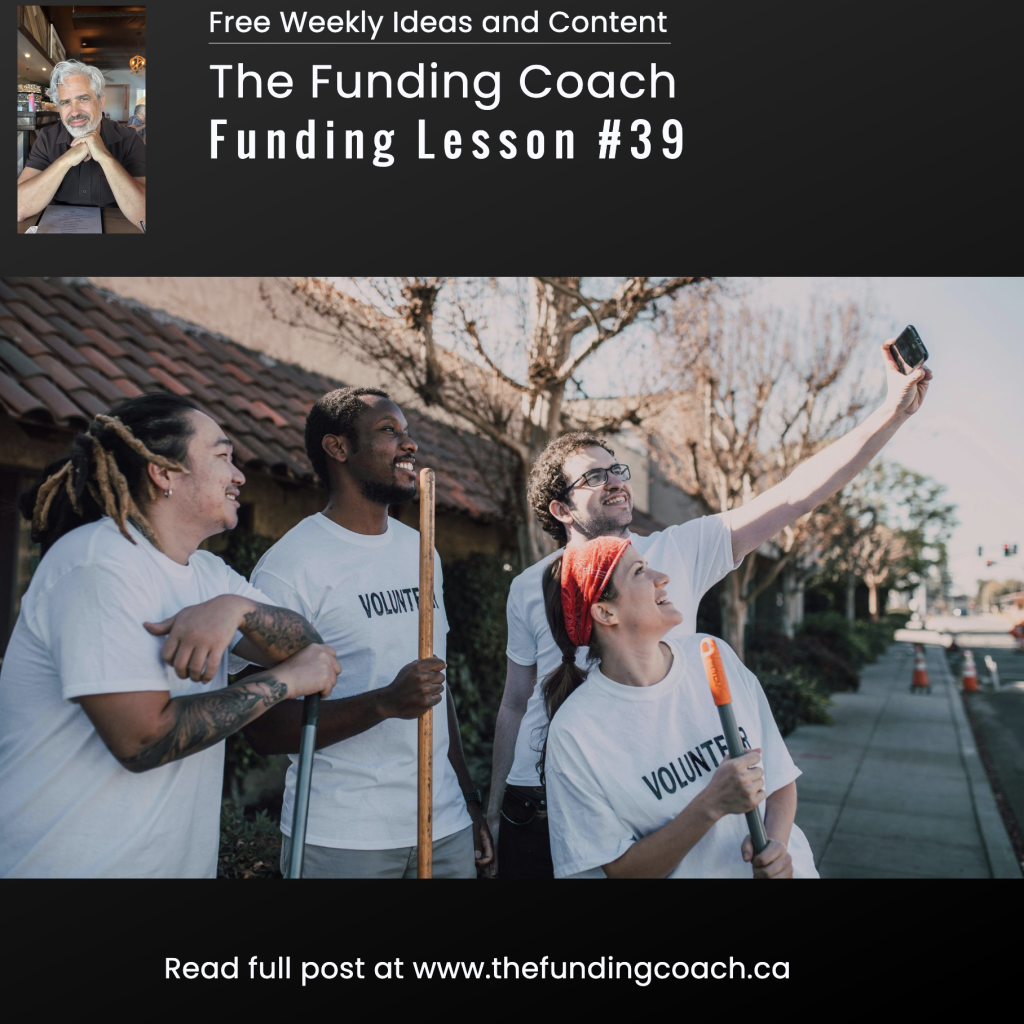
If you run a nonprofit, fundraising isn’t optional, it is in the job description. Raising money takes time, energy, and hustle. Let’s be honest: most of that hustle comes in the form of the dreaded ‘fundraiser.’
Car washes, auctions, bake sales, chocolate bars, work-a-thons, and more. The ideas are endless… and exhausting.
So here’s a one idea that most organizations miss: Give your fundraisers away. No, really.
Instead of running every event yourself, what if you encouraged others to do the heavy lifting for you? Imagine asking a business, community group, or even a group of passionate volunteers to organize a fundraiser on your behalf, and then simply hand you the proceeds.
Sounds dreamy, right? It’s also highly doable.
Many businesses already run charitable promotions, or events, so why not position your organization to be on their donation list? Imagine ten businesses, each hosting one event a year in your name. That’s ten fundraisers… without you planning a single one.
Help Them Help You
Get smart: don’t just ask, equip them. Give businesses and supporters a menu of fundraising ideas they can run on their own turf. Think:
-Casual Fridays with a donation jar
-Selling a special product with proceeds going to your cause
-Hosting a themed dance night or trivia night
-Placing a donation box at checkout
You can even encourage your existing supporters, volunteers, staff, and board members to take the idea into their workplaces, churches, book clubs, or community centers.
And the best part? You stay in control of your messaging. Provide flyers, posters, QR codes, and social media graphics. Make it easy for them to tell your story and drive traffic to your website or donation page.
Think Long-Term, Not One-Time
The real jackpot here is consistency. Once someone runs a successful fundraiser for you, ask if they’d consider making it an annual tradition. Becoming a “charity of choice” for a business or group means recurring income without you re-inventing the wheel each year.
I’ve had a ton of hobbies and interests over the years, but the one that’s stuck with me for the last 37 years is skateboarding.
Now, skateboarding isn’t exactly known as a “lifelong sport.” It comes with its fair share of danger, slams, and pain. Yes, the recovery definitely gets harder with age. But it’s given me so much: lifelong friends, a supportive community, and the chance to travel and experience the world in a unique way.

One of the biggest lessons skateboarding taught me?
You will fall. You will fail. But you get back up. Every single time, or try to. Turns out, that same lesson applies to fundraising.
You’ll get told no. You’ll spend hours (and hours) on grant applications that don’t pan out. You’ll put on events that just… flop, or lose money. But if you keep pushing, learning, and trying again , it does pays off.
Over the past decades, I’ve had the chance to help with all kinds of projects, especially ones focused on creating fun, active spaces for kids, youth, and families. One of the best parts of that journey of me, has been being involved in nine different skatepark projects.
Projects like these can cost hundreds of thousands of dollars. And understandably, a lot of communities get discouraged when they hear those numbers. It’s easy to think, “We could never raise that much.”

But here’s the thing: You don’t have to do it alone. That’s where a funding coach comes in. I help communities, nonprofits, and groups build a funding plan that can actually work, with less overwhelm, wasted time, and effort. Together we can figure out where to start, how to find the right grants, boost your donation streams, and build a team to make your vision happen.
If you’ve ever thought: Where do we even begin? Does anyone even fund this kind of thing? Is this just even possible?
Let’s talk.
Dave, thefundingcoach.ca
Here is what one community group had to say.
‘Dave Sawler has been a tremendous resource to the Lawrencetown Skatepark Project. His guidance has helped our team present our goals and fundraising objectives to the various stakeholders, community groups, and levels of government connected to our project. We are glad to have him on our team.’ Andrew Parrott

Buildings cost money. They cost to build, maintain, heat, clean, staff—and that’s before you even account for the many unexpected expenses that always seem to arise. For many nonprofits, faith communities, and mission-driven groups, having a dedicated space is essential to fulfilling their purpose. But too often, the financial burden of owning or maintaining a building becomes overwhelming—draining resources, limiting impact, and in some cases, sinking the organization altogether.
It can feel like a never-ending struggle to cover these costs through donations, fundraisers, or offerings. And the truth is, it is never-ending—unless something changes.
Many groups have started finding creative solutions by reimagining how they use their space. Every building and situation is different, but almost every space holds untapped potential. These changes aren’t just about cutting costs—they’re also about expanding mission, deepening community connections, and creating new paths for impact.
Across the country, nonprofits and faith communities are turning their biggest expense into their greatest asset. Unfortunately, these conversations often don’t happen until an organization is in financial crisis—or not at all, which can lead to closure. But it doesn’t have to be that way.
Reimagining Your Space can:
It is possible to have a building that pays for itself—or even generates surplus income. Yes, it takes intentional planning and work, but compared to the endless cycle of fundraising, it can be far more effective and empowering.
These are big conversations, but they’re worth having. If your organization, faith community, or nonprofit is interested in exploring how to Reimagine Your Space, let’s talk. I’d love to help you see the possibilities.
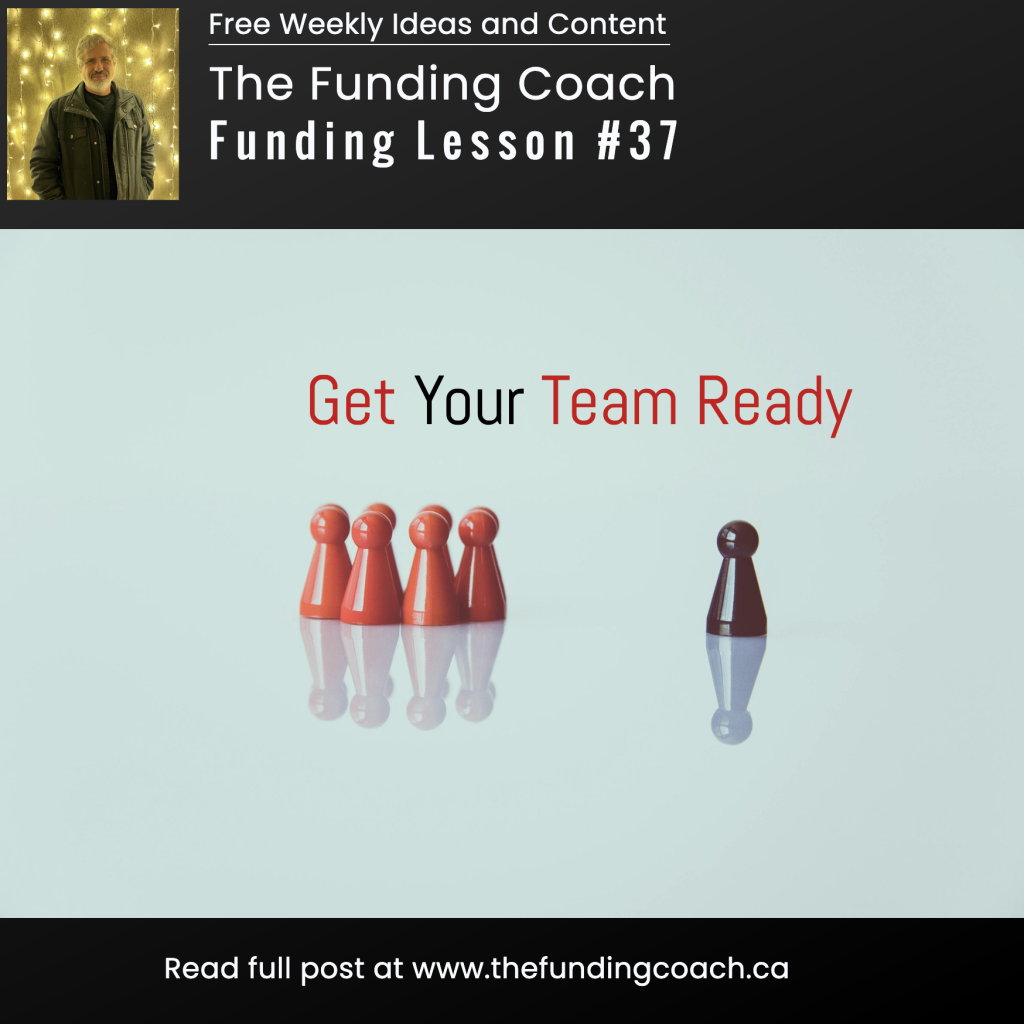
I’ve talked before about getting your team involved in fundraising. But depending on the size of your organization, your “team” might be just you—or it could include family, friends, volunteers, staff, or all of the above.
No matter the size or makeup of your team, you can increase your reach by equipping everyone with the right tools.
Start by keeping it simple. Give each person a clear, short list that includes:
This is the easiest way to multiply your message—by empowering others to share it again and again.
This approach works best when it’s:
So take a little time to share a clear ask and action plan with your team. Make sure they understand it and can communicate it confidently.
It’s time to kick off a new year, set goals, and make plans on how to help your nonprofit succeed in its mission in 2025. If you worked hard in 2024 to either thrive or just survive, talking about the “big thing” or “next thing” you have to do might actually sound a bit overwhelming.
As we kick off the new year, it might be more profitable to not focus solely on the future, but instead on the past. Here are two funding stats you should know:
Approximately 20% of donors become repeat donors. This means, 80% of people who give to a non profit donate once, but yet are the most likely people to become repeat or long term donors.
Nonprofits spend up to 500% more money and effort to acquire new donors than to retain existing ones. It is still a lot of work to learn how to retain donors, and to help one time donors become long time supporters, but is is far less work than spending year after year seeking new givers.
Knowing this, before diving into new ideas for 2025, why not take a moment to reflect on 2024? The donors and supporters you already have are your most important asset.
So, before jumping into all your new plans for 2025, it will be far more valuable to answer this question: “How am I making those who donated in 2024 feel valued and appreciated?”
In January, as you take time to answer this question, I’ll also be sharing a few ideas on how to make this happen. So please follow, and let’s work together to make your 2025 fundraising your best year yet!
The holidays are coming. For some, this is a joyful thought. For those in the nonprofit world, it might raise a different question: Am I going to survive? There are so many individuals and families in need, and there are endless events to organize. You’re pushing for year-end giving, and it can all feel overwhelming and draining.
No matter what’s on your plate, you do need to take time to slow down. Burnout in nonprofits is far too common. The pressure—both internal and external—to keep everything afloat and meet the real needs of the community is relentless.
As we approach the end of the year, here are a few things you can put in place now, so you can truly take a break later in the month:
Tell people you’ll be taking time off. This creates accountability for yourself and gives others a heads-up that you’re stepping away.
Plan and set dates to take time off. Block out time in your calendar and stick to it.
Automate your social media posts. If you’re pushing for year-end giving, set up your posts in advance. This lets you take care of necessary business without the daily grind.
Rest. Do what fuels you. Whether it’s time with family, reading, or simply unwinding—rest is essential. Your community needs you, but you can only give your best when you’re recharged.
Be thankful. Reflect on the progress you’ve made and the impact you’re having. Gratitude helps sustain you through the busy months ahead.
The work you do is vital, but so is your well-being. Enjoy the holidays!
Funding Lesson #31 – Build Long Term Funding
Running a nonprofit is no small feat—it takes resources, dedicated staff, and unwavering commitment to serve our communities. But here’s the challenge: most funding opportunities focus on short-term projects, leaving core operating costs in the shadows.
To truly thrive, nonprofits need to prioritize long-term funding strategies. Here are a few ideas to help you secure that vital support:
Pursue Multiyear Funding Grants: Yes, they require more effort, but the payoff is immense. Having a reliable funding source for several years allows you to build sustainable programs and retain your talented staff.
Create Long-Term Giving Options: Whether on your donation platform or at events, offer donors the chance to commit to long-term support. It fosters deeper relationships and ensures your mission continues to flourish.
Educate Your Donors: Make it a core part of your strategy to inform donors and the public about your organization’s biggest needs. Transparent communication about the importance of core funding can turn one-time givers into long-term supporters.
By focusing on these long-term funding strategies, you can alleviate the stress of constant fundraising, allowing you to concentrate on what truly matters—creating lasting impact in your community.
Remember, a reliable income stream not only helps you plan for the future but also empowers you to fulfill your mission without constant worry. Let’s work together to make sustainable funding a reality! For more visit www.thefundingcoach.ca
The majority of nonprofits receive their largest donations in December, with giving steadily increasing throughout the fall and peaking at year-end. This surge is driven by both charitable and tax-related reasons. Many nonprofits ramp up their community support and do extra work during the holidays, inspiring others to give. Additionally, those seeking income tax receipts often choose to donate more, knowing they’ll benefit from tax deductions.
Since the coming months are often the most generous for donors, it makes perfect sense to create a plan to maximize this opportunity. There are various methods to boost donations, from online campaigns to in-person events—choose what works best for your organization.
Here are a few ideas to consider, regardless of the type of plan you create:
Leverage the Charitable Season
This is a time when many people feel the desire to help others and do something meaningful. Provide clear, practical ways for them to give through your organization. Explain how their contribution can make a difference in a simple and direct manner.
Create an Online Gift Board
Promote a “gift board” through social media and at your events. For example, if your organization feeds families during the holidays, create links or buttons that allow donors to “Feed a Family.” You can also offer options to feed multiple families (e.g., “Feed Five” or “Feed Ten”). This approach makes the donation tangible, visual, and easy to complete.
Encourage Long-Term Giving
Extend the holiday giving spirit into the new year by offering donors the opportunity to support your programs year-round. For instance, if your nonprofit provides services to kids, youth, families, or seniors, offer an option to cover both holiday and year-long support, such as meals, recreation, or transportation. Framing this as a meaningful holiday gift to a family can resonate deeply with donors.
No matter which strategy you pursue, start now. Many individuals and businesses are already planning their end-of-year giving, so it’s essential to engage in those conversations early.
For more ideas and guidance, contact The Funding Coach at www.thefundingcoach.ca.

We have several large-scale youth and family centers opening, being built, and in the planning stages here in Cape Breton. It took an incredible amount of work by countless individuals, hundreds of meetings, thousands of hours of effort, and sheer persistence.
However, not everyone may be aware of the ‘sparks’ that made this possible. The first spark was the need itself. The situation was dire, with rising addiction levels and a tragic number of youth and young adults losing their lives.
But another spark occurred. An old friend reached out to me with the ability to offer financial support on a scale I had never imagined. He asked, “If we could do anything for our community, what would we do?” To be honest, I had always considered myself a dreamer… or so I thought.
We began discussing this question with friends and community members. Once we removed the constraints from our thinking, our dreams evolved. Up to that point, my aspirations for the next year were limited by what we could realistically achieve. Maybe we could add a little something, tweak our approach, grow incrementally, and hopefully secure some new funding. But dreaming big, on the scale of the need, seemed like fantasy.
In this new context, we started to articulate what community transformation could truly look like. We considered the resources required to address the problem at its core.
I believe we all dream of what could be—the things we genuinely hope for. However, reality often dims the hope that such dreams could be possible, leading us to operate within a smaller, more constrained vision based on past experiences.
Here’s the kicker: after years of planning and discussion, my friend did not come through with the funding. We received zero dollars. That might sound devastating, but it wasn’t. It was disappointing, but it was too late to halt the progress we had made. By beginning to dream and articulate a real, practical, and hopeful vision, we started to attract the funding we needed.
When I think about change-makers, I believe their ability to dream is what sets them apart. They envision possibilities beyond current limitations and refuse to let past constraints dictate their aspirations.
After this experience, I now believe it is crucial to sit down with your team or organization and dream without limits. Imagine what you could achieve without the constraints of present realities. It is in this space of bold dreaming and vocalizing ideas that people will rally behind them, and funding is more likely to follow.
Not all dreams will come true, and even this journey was fraught with years of work, struggles, doubts, and burnout. But dreaming is the only way to pave the path to a new and better future for the people you serve.
So, dream to the size of your Dreams
At our non-profit, when we needed help urgently—whether for meals, diapers, bikes for kids, or family support—social media often proved to be the fastest and most effective way to rally our community. This underscores just how crucial social media can be in times of crisis.
For many nonprofits, social media isn’t just about keeping followers informed; it’s also a vital tool for fundraising. If you’re feeling stuck trying to grow your following, remember: your nonprofit has unique advantages. Here’s how to make the most of them:
 Share Compelling Stories: Great stories resonate and get shared. Pair them with eye-catching photos, a clear call to action, and make it easy for people to help. Don’t forget to ask your audience to share your posts!
 Utilize Events: Events give you a direct opportunity to engage with people. Consider incorporating a QR code in your presentations that leads straight to your follow button, and ask everyone to follow. This works wonders for fundraisers, community events, or any programs you run.
 Act Immediately: Turn every moment into a chance to gain new followers. For instance, offer a door prize at your next event specifically for new social media followers.
Implementing these strategies can help you grow your follower base quickly and effectively. Need more tips on promoting your nonprofit or community group?
Contact me, the funding coach, for more info and strategies.
#Nonprofit#Fundraising#SocialMediaStrategy#CommunitySupport#FundingCoach
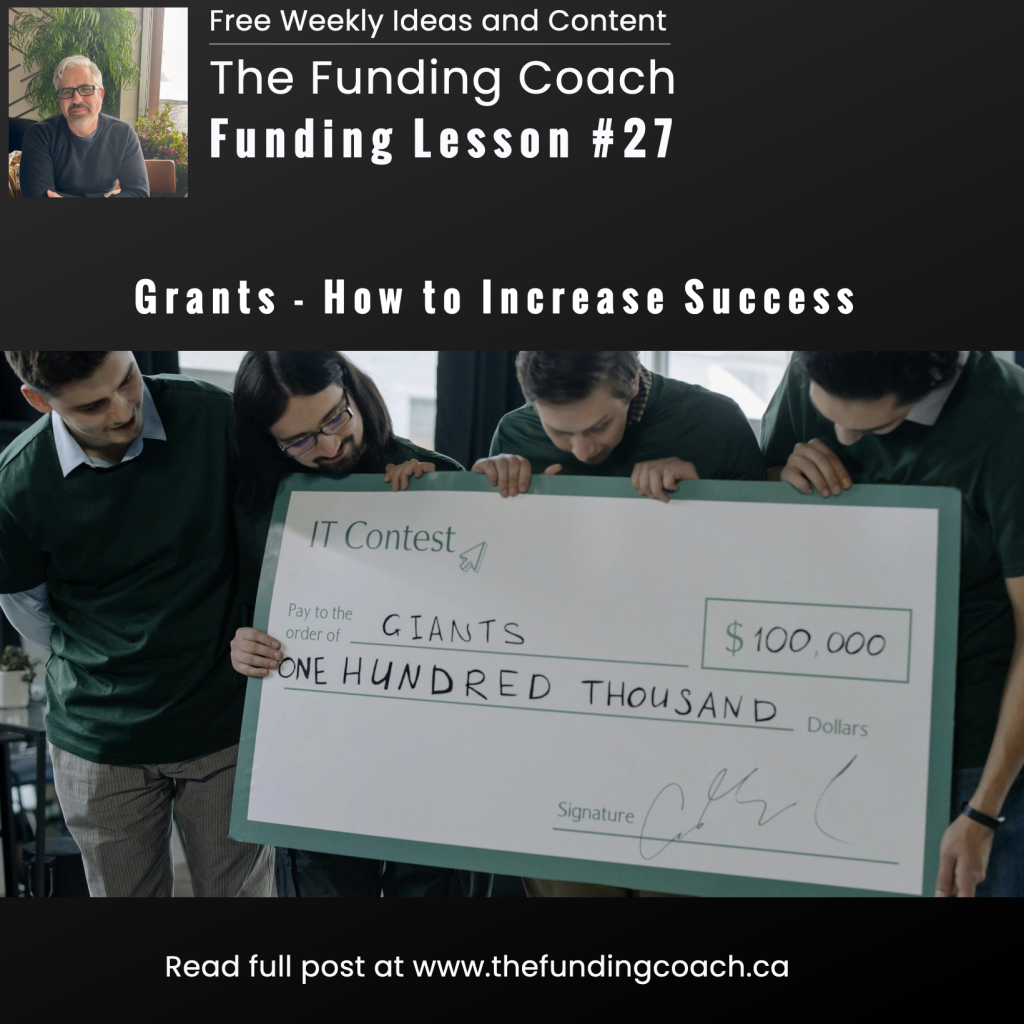
For many nonprofits and community groups, securing government grants and foundation support is essential. However, the process of completing applications, understanding eligibility requirements, and crafting proposals for uncertain funding can be overwhelming.
To enhance your chances of success, consider the following approach:
Every organization has its own goals and mission, both for the present and the future. When seeking a grant or writing a proposal, you typically present these objectives. Essentially, you’re asking another organization or level of government to invest their resources to help achieve your goals. This approach is standard practice.
However, this method often overlooks a crucial factor: foundations and governments allocate funds to advance their own objectives. Understanding this can transform how you approach funding requests.
For instance, in my province, the government has a stated goal of reducing child poverty. Knowing this, when proposing a project aimed at benefiting children, youth, or families, I would highlight how the project aligns with the government’s goal of reducing child poverty. By demonstrating that investing in your project contributes to their objectives, you create a mutually beneficial situation. Your success in meeting your goals translates to their success in achieving theirs.
You don’t need to alter your organization’s mission to align with this strategy. Instead, focus on identifying funding opportunities and grants that support your mandate while also addressing broader community goals, such as enhancing community health.
Do this and increase your level of success. For more info, help with applying for grants, or writing funding proposals please contact the funding coach.
Raising funds takes time because building trust takes time. There is something powerful that happens when you build credibility through perseverance.
I definitely don’t encourage people to stay in places that aren’t working for them. There is always a time to leave.
However, there is a tipping point that leaders reach by staying long enough that people associate you with the work and cause you represent. It’s hard to know exactly how long it will take, but it’s definitely years.
When it happens, some things get easier. It becomes easier to ask for more, to present to the right people, and to become a voice for the cause you represent in your community.
The secret is simply consistency. Keep doing what you do. Do it well. Don’t give up. Stay.
My community, like many others, is littered with remnants of past projects left to fall apart—a recurring issue across various sectors. I’ve witnessed large-scale government-funded youth projects receive millions, only to disappear soon after funding dried up. Similarly, numerous churches and community centers expand ambitiously, only to struggle financially with higher ongoing expenses.
While securing large donations and grants can be immensely beneficial, they can also potentially sink your non-profit or faith community.
Over a decade ago, I received invaluable advice on creating sustainability. At the time, our organization had just acquired significant funding earmarked for expanding our building. With differing opinions among members on its use, seeking external guidance was crucial.
The consultant pointed out that more space meant new programs, opportunities, and long-term bills. He challenged us to invest a portion of the funds in income-generating initiatives, cost reduction strategies, and enhancements that would boost sustainability—not just in completing our building. We followed his advice, making our space more accessible to the public, increasing rentable areas, and adding features to attract new participants.
Think of it this way: getting a puppy isn’t just one decision; it’s a commitment to countless decisions, financial adjustments, and hard work. Yet, the joy and companionship it brings make it worthwhile for years to come.
To build a truly successful non-profit over the long term, integrating sustainability into your fundraising and growth strategies is essential. Otherwise, you risk falling into recurring pitfalls. It’s crucial to ask the tough questions: Will new funds this year lead to unforeseen costs next year? What happens when a grant for new staff or programs expires?
This concept might be new to many, but it’s prudent to factor in costs and expenses into your fundraising budgets that mitigate ongoing financial burdens associated with growth. This approach becomes even more critical with larger donations, grants, or expansions.
If you’re interested in learning more about sustainable fundraising practices, please visit thefundingcoach.ca.
I have been involved with skateboarding for almost four decades and have helped raise funds for multiple parks, ramps, and events. It has always been a huge passion, and I am very excited to be involved with two skateboard projects right now that are building parks and ramps in Nova Scotia.
This post is just an introduction to this concept, with more to follow over the next few weeks. I often get asked these questions about raising funds: “Where do we even start?” and “How do we build support?” Whether you are just starting out or an older non-profit that is expanding, there is one common answer: Build a ‘Case for Support’.
Non-profits begin because passionate people are trying to meet urgent needs. We need to find funds quickly and consistently. It is not easy to get funding, and it’s easy to get frustrated when it doesn’t happen. However, a significant reason it may be difficult could be that your organization has never taken the time to build a case for support.
A case for support presents a compelling vision for what can be achieved. It involves articulating credible reasons why people, supporters, levels of government, or donors should trust you with their funds.
By building a case for support, you will need to articulate things like:
What is the need?
How can the need be met?
How can you provide the solution?
What is the cost?
Who are you? (Do you have the ability to fulfill this dream?)
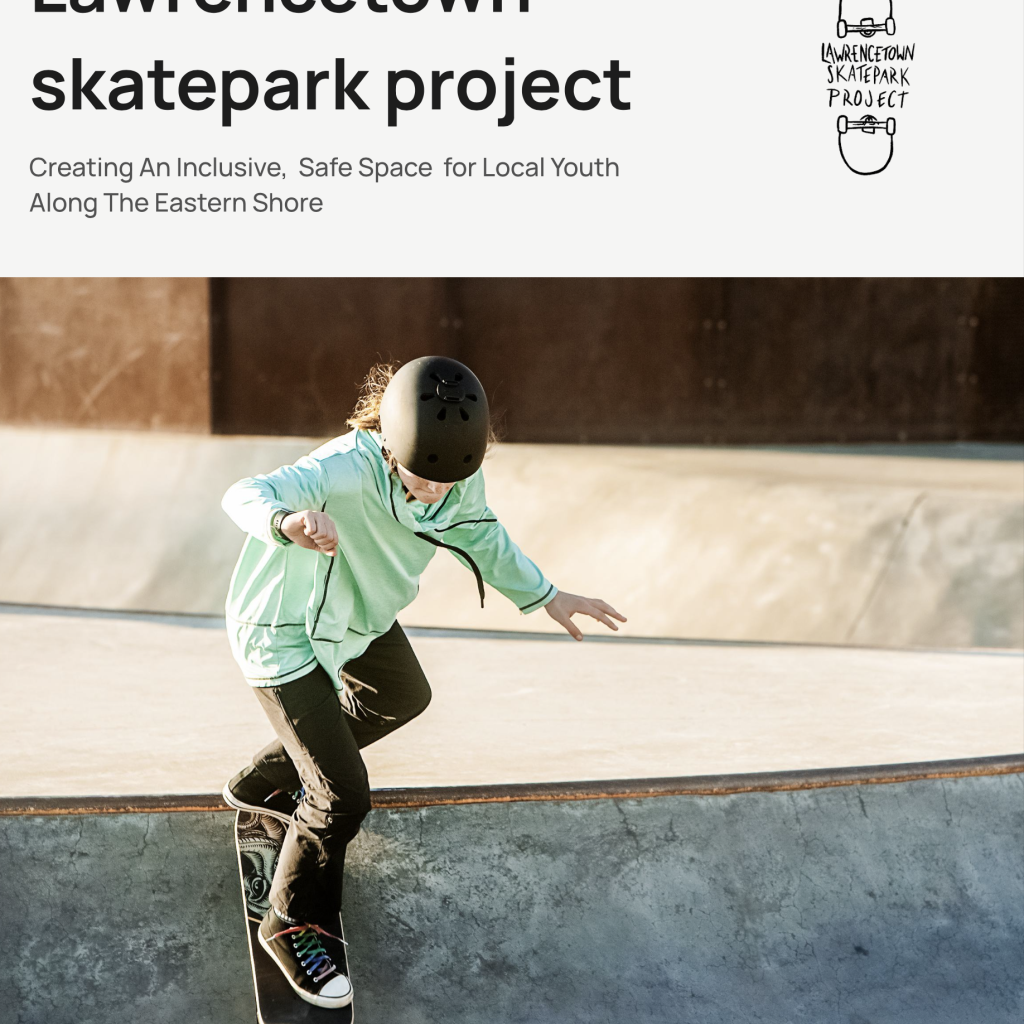
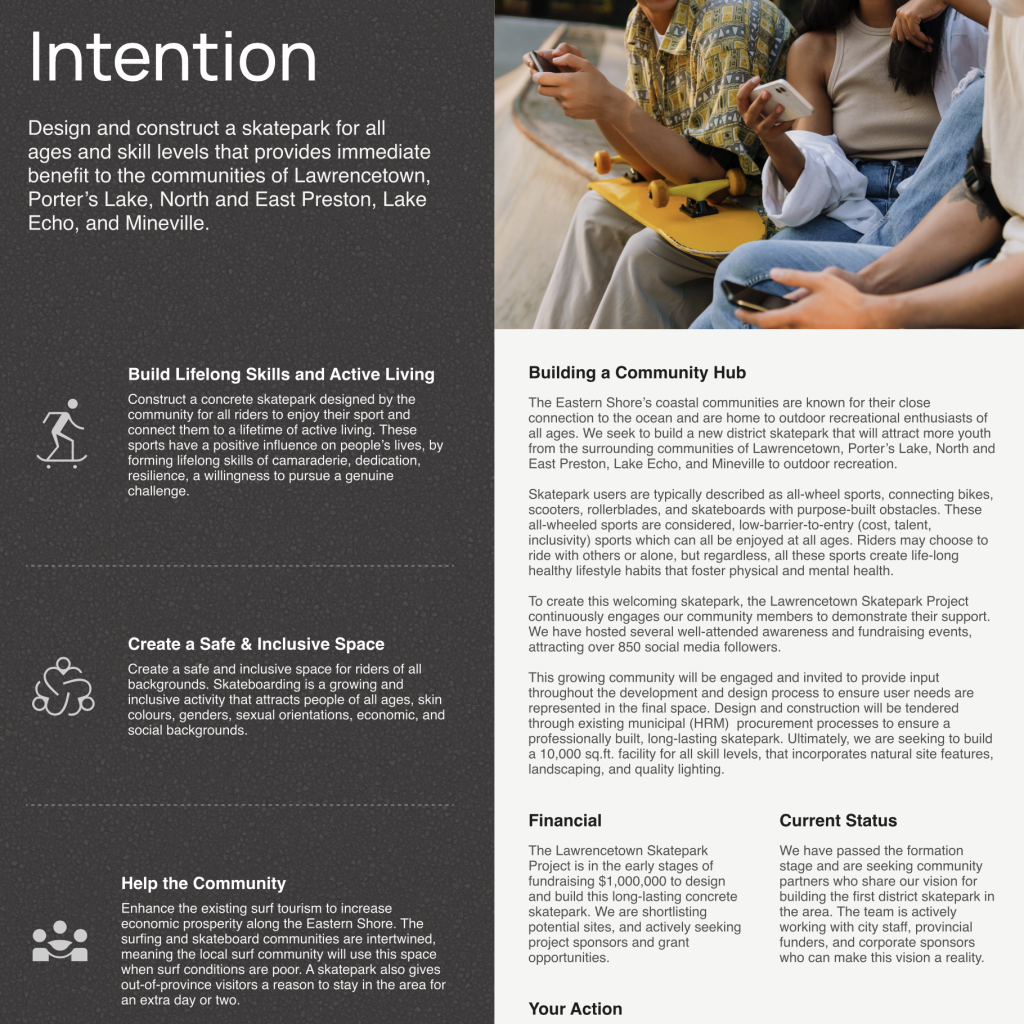
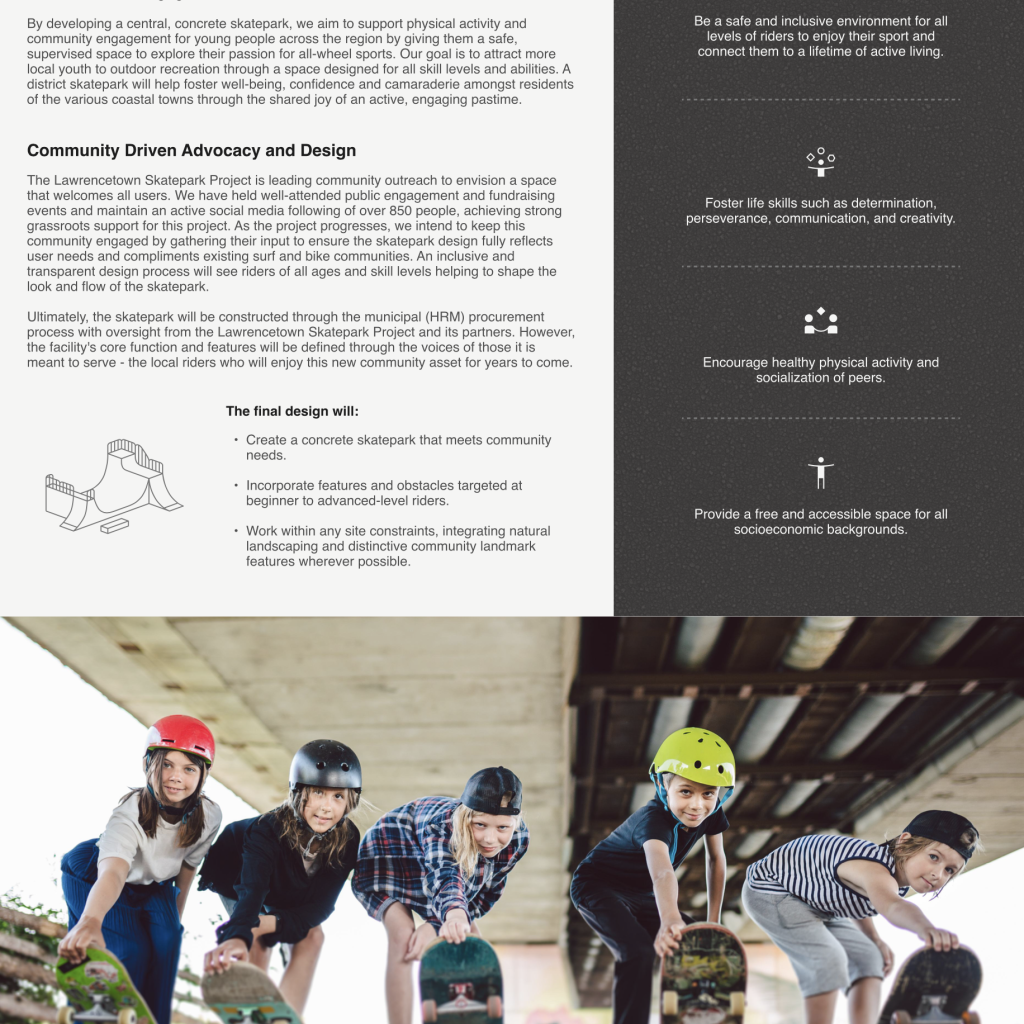
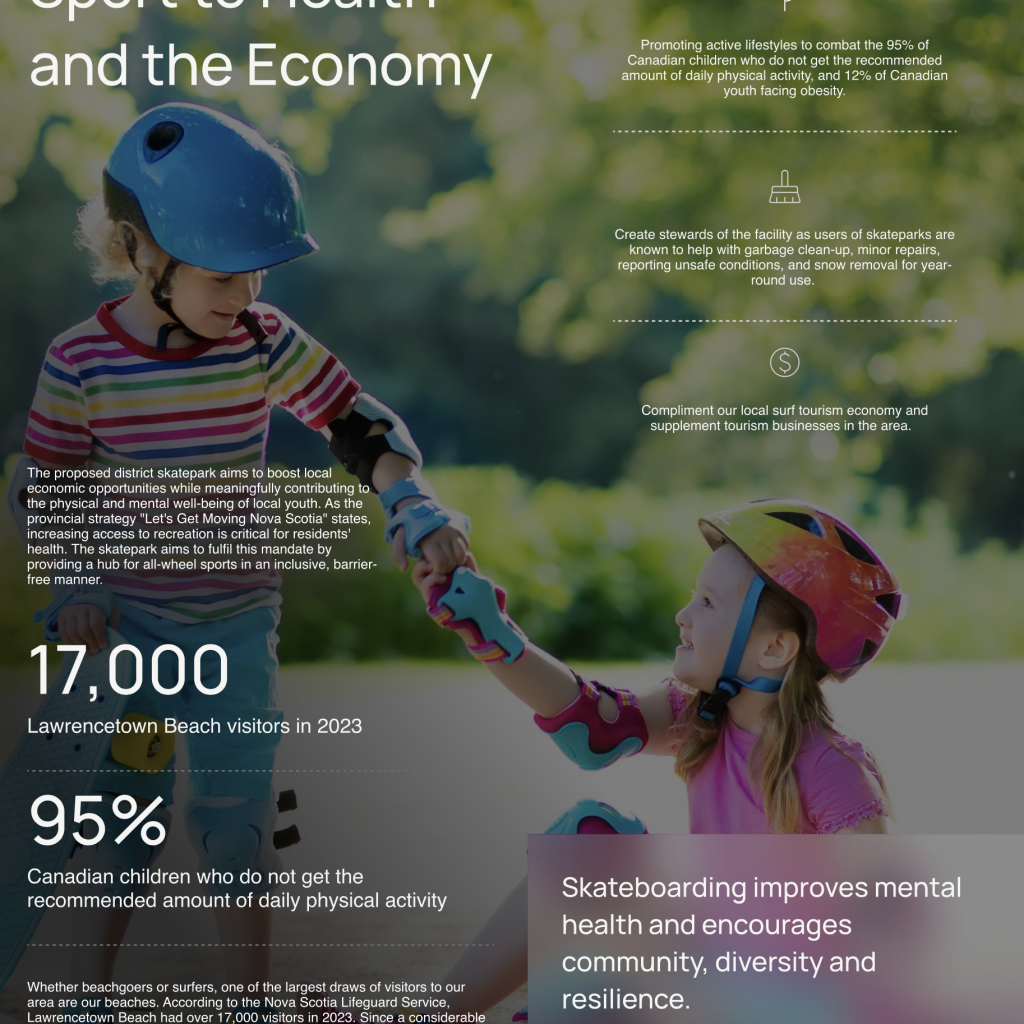
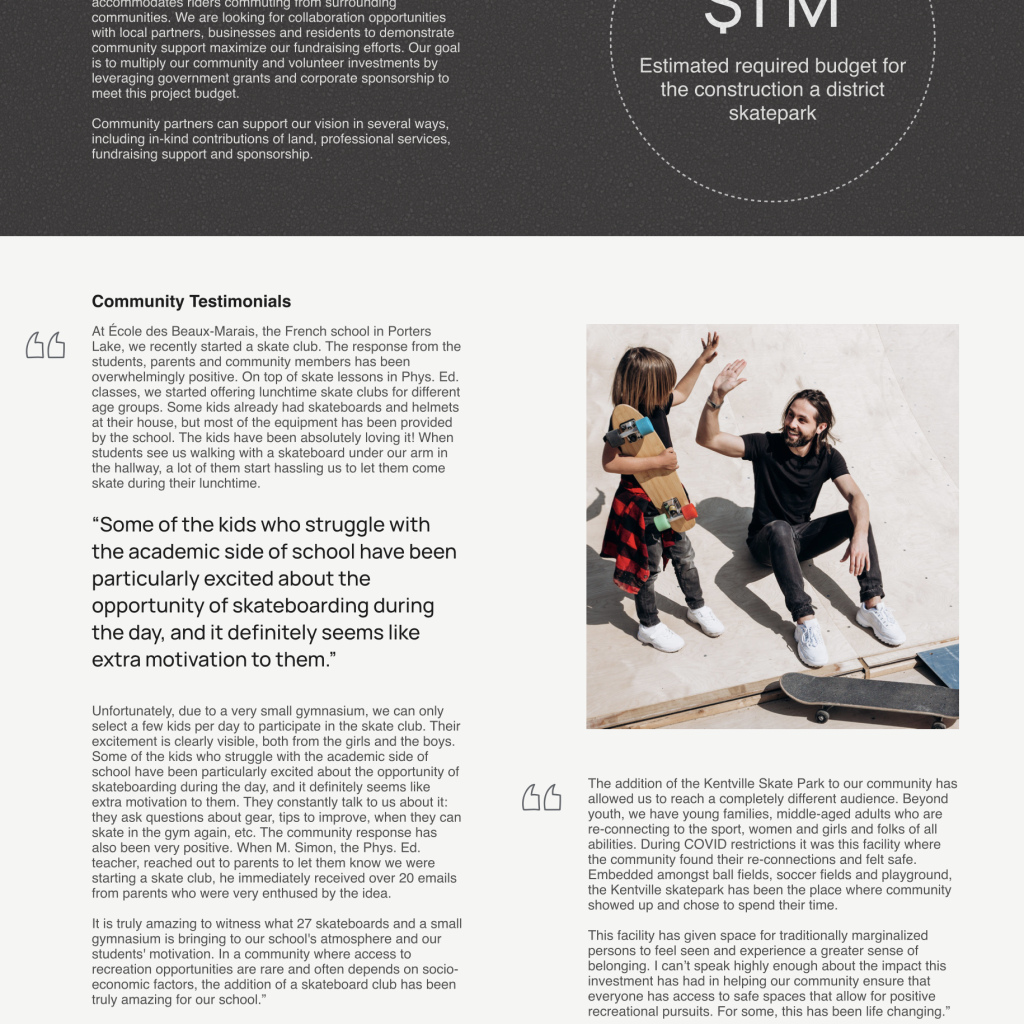
So, back to skateboarding. I am attaching a case for support put together by the Lawrencetown Skatepark Project. It is a great example of what building a case of support can look like.
Having a case for support allows you to share your vision with a much larger group. It helps communicate on a greater level and opens doors to funders who will only support groups that have done their homework. It provides clear direction and a clear ask.
Furthermore, a bonus is that when your team works on a case of support together, it brings unity of purpose. It also informs your whole team of the goals and needs, and everyone can contribute to making your non-profit succeed.
If you would like to discuss how to build a ‘Case for Support’, please contact the funding coach.
Have you ever wondered why some organizations seem to receive a higher amount of grants, donations, and large-scale gifts, while others struggle? There are several factors that can lead to this, such as the right team members, a clear vision, and just hard work.
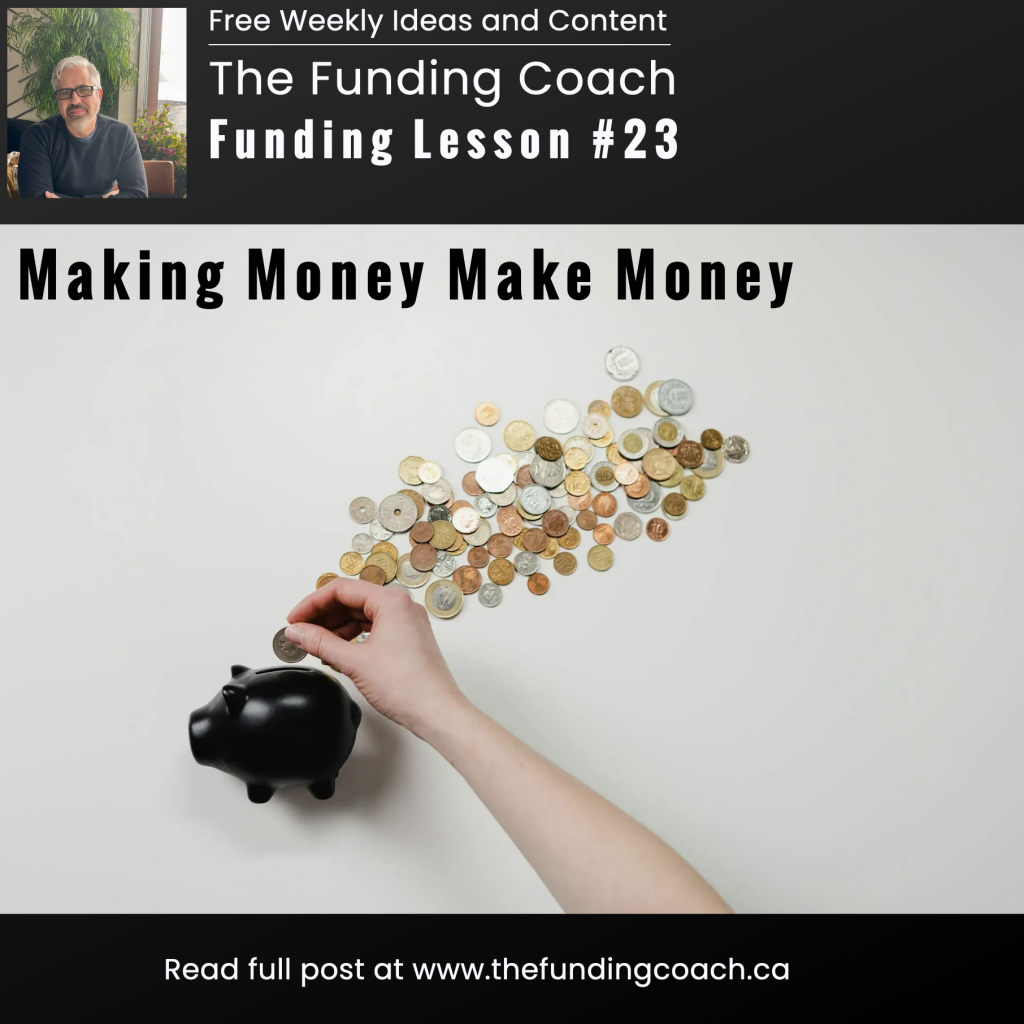
One very important, and less understood, factor, however, is that some organizations have learned to leverage funds to get more funds. This is just a short group of ideas on learning funds to get more funds.
Here is one example. Most municipal, provincial, or federal grants, plus many foundations, will only fund 40-50% of a project. Some organizations never apply for certain funding because they don’t believe they will be able to cover the rest.
However, this is where a fund strategy can help. One where you move from thinking single grants/donations to the big picture.
It is amazing how fundraising can change if you know that if you can raise $25,000, you can use that to be eligible for a grant and double your funds for a project. People give more when they know their funds will go further.
It is also a perfect time to bring all levels of government together and challenge them to find a way to help. You can use $50,000 from a provincial fund to cover the 50% of what you need for a federal grant, to get $50,000. The principle can be applied, however, no matter what the grant or funding is.
When people know their funds will go further, it is a huge incentive to give. This principle is not only about grants but also with donors. If someone was willing to donate $10,000 to your organization, then this is the perfect time to run a matching campaign. One where you challenge people to give, and if you reach a goal of $10,000, then it will be matched.
This is a way to increase giving but also to attract bigger donors and donations. Why does it work? If a large donor sees that your organization is not just asking for money but is asking everyone to chip in and do their part, plus is putting in their own effort, it is an incentive to give higher amounts as their gift is creating more giving.
So it may seem some organizations are just lucky, or are liked more, or have special connections, and receive more funding. While there may be pieces of that which are true, it is also very possible for an organization to learn how to do this. Yes, it is work, it is networking, but it starts with a funding plan. One that looks at the big picture and sees how the pieces can be put together. One that understands that your money can make money.
If your organization would like help in creating a funding strategy, why not reach out to the funding coach?
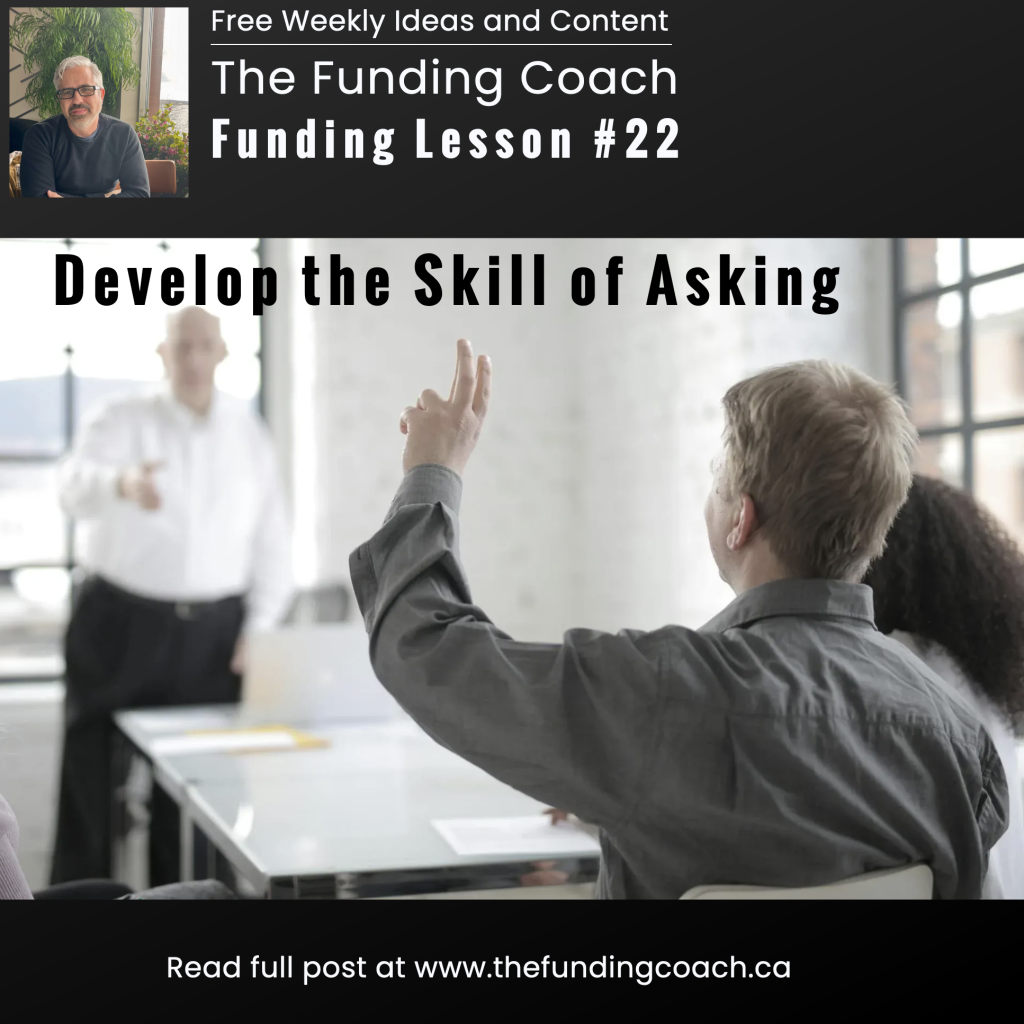
Asking for help is tough, both in our personal and professional lives. You may hate asking for directions so much that you will just stay lost. Asking can feel embarrassing for some people, as it exposes that we have a need.
‘You don’t have because you don’t ask.’ This, of course, is taken from scripture, but it is very true in all situations. Your organization will never have what it needs to operate if people are not aware of what you need, and if no one is ever asked.
Letting our needs be known can, of course, happen in many ways: word of mouth, social media, emails, mail-outs, and our staff/volunteers. However, this is one skill that will help your organization go farther. It is the ‘Skill of Asking.’
I remember sitting in a meeting just a few years ago, where we were trying to put funding together with multiple levels of government and departments. We had an amount we needed to be matched. There was discussion on smaller amounts being given. At one point, I had to clearly state what we needed. We needed six million dollars.
Later, it was confirmed that the money was going to be given for the project, which is amazing. The truth is if no one clearly asked for that amount, it may never have been given. Someone needs to ask.
This, in no way, means if you just ask people for donations, support, or volunteers, that you will get it. That is why asking is a skill that needs to be developed. Here are just a few pieces of what asking means:
1 – The willingness to be upfront with people about your needs.
2 – You have to be ready to back up your request with data and some proof you can put this help to good use and create a result.
3 – You have to learn when is the right time, place, and person to ask.
4 – You have to build relationships and trust.
5 – You have to be okay hearing ‘No’ and move on.
When I see organizations that are doing well long-term, there is usually someone in the organization who has learned to ASK.
If you would like to explore developing a funding strategy, including how to ASK, why not reach out to the funding coach?
www.thefundingcoach.ca
What is ‘The Funding Coach’? Here is the simple answer: I am helping nonprofits, faith communities, and organizations build sustainable funding plans so they can serve their communities in greater and more consistent ways.
Over the past decade, I have helped raise over twenty-five million dollars in community development projects and received over 150 grants for charities I was working with. I have taught fundraising classes at events, colleges, and universities.
For the past decade, I took on the responsibility to raise funds for my own local community projects. However, as the Funding Coach, I am now taking on the role of helping other individuals, groups, and organizations fulfill their dreams to serve their own communities.
On top of coaching, I am part of a group representing the public to address Mental Health and Addiction issues in the Eastern Zone in NS. It has been a long-term passion to see addiction and poverty rates decrease while community health grows.
This has led me to be a proponent of the Iceland/Planet Youth strategy. I have done 100+ presentations, consultations, and strategy building sessions on how organizations can work together to create community transformations.
If your organization needs to:
– Create a sustainable plan to fund your organization.
– Develop a strategy to create long-term change and create a ‘Case for Support.’
– Create better giving systems.
– Learn how to apply for grants.
– Raise short-term funds for a project.
– Or, you just need help with fundraising, encouragement, and a positive mentor.
Then why not contact me about how we can work together to help your organization? I want to save you time, help you increase support, and help you serve better.
You can sign up for our newsletter at www.thefundingcoach.ca or follow and receive free regular fundraising lessons at https://www.facebook.com/thefundingcoachonline
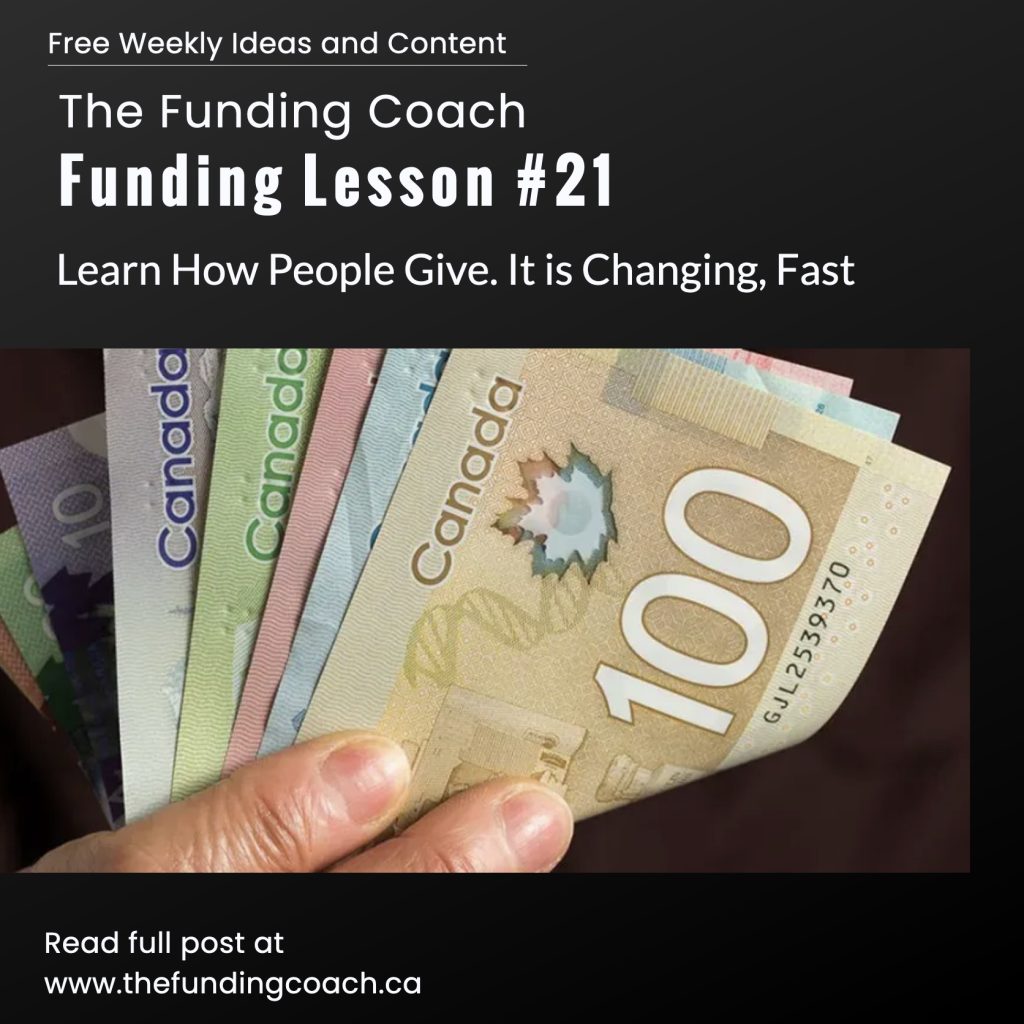
How people use money is changing. In one recent study, it was found that only 31% of Canadians use cash for day-to-day transactions. Another finding shows that in the last 6 years, the amount of cash used for day-to-day use has dropped by 59%. This trend is going to continue. Cash likely will never disappear, but its use is on the decline.
You may or may not be like me, but I rarely use cash, or even my debit cards, as I primarily use my phone for all in-person and online purchases. When I go to the grocery store, events, or the mall, there are always someone fundraising or selling tickets. For a person like me, I never donate or purchase what is being sold, as I no longer carry cash.
This can be relevant to those raising funds through fundraisers, as if you are only accepting cash, you are stopping a large majority of people from donating or buying. However, this is not just about cash. It is about understanding how people give. People generally give in the easiest way possible. It is up to us to create giving systems that are easy and open to everyone.
One concern I have heard over the years from many charities is that adopting an online giving platform will cost them a small percentage of each donation. That can range from 2-5% of donations. However, that is flawed thinking. In reality, if you focus on online or electronic giving to those not currently giving, then you are getting 95% of funds from donors you were never going to have.
In a day when a large majority of people prefer not to give by cash, or any complicated method, it may be time to look at two things about your giving system: 1 – Is giving accessible to everyone? 2 – Are our giving systems as simple as possible? Addressing our giving systems needs to happen on a regular basis. The ways people give, the types of currencies / methods are changing drastically this decade. So as non profits we don’t want to be on the losing end because we limit donations.
If you are looking for more help on creating easy giving systems and are interested in learning how to increase giving to your organization or non-profit, please contact the funding coach.
This may be shocking to those leading or involved with nonprofits, but one recent research study found that only 52% of Americans trust nonprofit organizations. Fears of overspending, stories of highly paid CEOs, or mismanagement of funds have chipped away at people’s trust. This can be disheartening, as it means that whatever campaign, promotion, or media you put out, it will be immediately rejected by some people.
However, I believe this is also a huge opportunity. This is where we can use social media to build something powerful. It is TRUST.
We can think social media is only about promotion, how we ask for help, or as part of a fundraising campaign. That is a mistake.
‘What if you used your social media, in part, to consistently let people see that you do what you say you do?’
This lets supporters, and future supporters, see the results of their giving, their volunteering, and support. It lets them know their contributions are really doing something, and your team is worth investing in.
Trust is built by being consistent. It is not about the spectacular. It is letting people know they can count on your organization to fulfill the mission you are a part of.
Most organizations do some form of strategy when it comes to social media. It may be time to think about what ‘Building Trust’ looks like as part of your plan. Doing so will increase the effectiveness of future campaigns and the search for volunteers and supporters.
To learn more about building trust through social media, please contact us at the Funding Coach.
www.thefundingcoach.ca
In the heart of every nonprofit beats the desire to reach more people, to touch more lives, and to create lasting change. But how do we expand our reach beyond our immediate circle?
It starts by recognizing the limitations of our current connections. While our circle of influence may be strong, it’s not infinite. So, let’s ask ourselves: How do people connect with us?
From friendships to social media, community events to fundraisers, the avenues are endless. Some are robust, others less so, and there may even be untapped potentials waiting to be explored.
Feeling overwhelmed by the sheer number of options? You’re not alone. Nonprofits often face the challenge of limited time and resources. But here’s the secret: You don’t have to do it all.
Instead, here are two beginning steps. First, focus on strengthening what you’re already good at. As a team, brainstorm ways to expand your successes. Second, try something new! Take the time to cultivate simple, effective strategies for connection, whether it’s building mailing lists, boosting your presence on social media, doing community events, etc.��
You can also work with a coach. Look at what other groups are doing successfully. Then create a plan to expand into new circles of influence. Let’s embark on this journey together, one connection at a time. Because when we expand our reach, we amplify our impact.
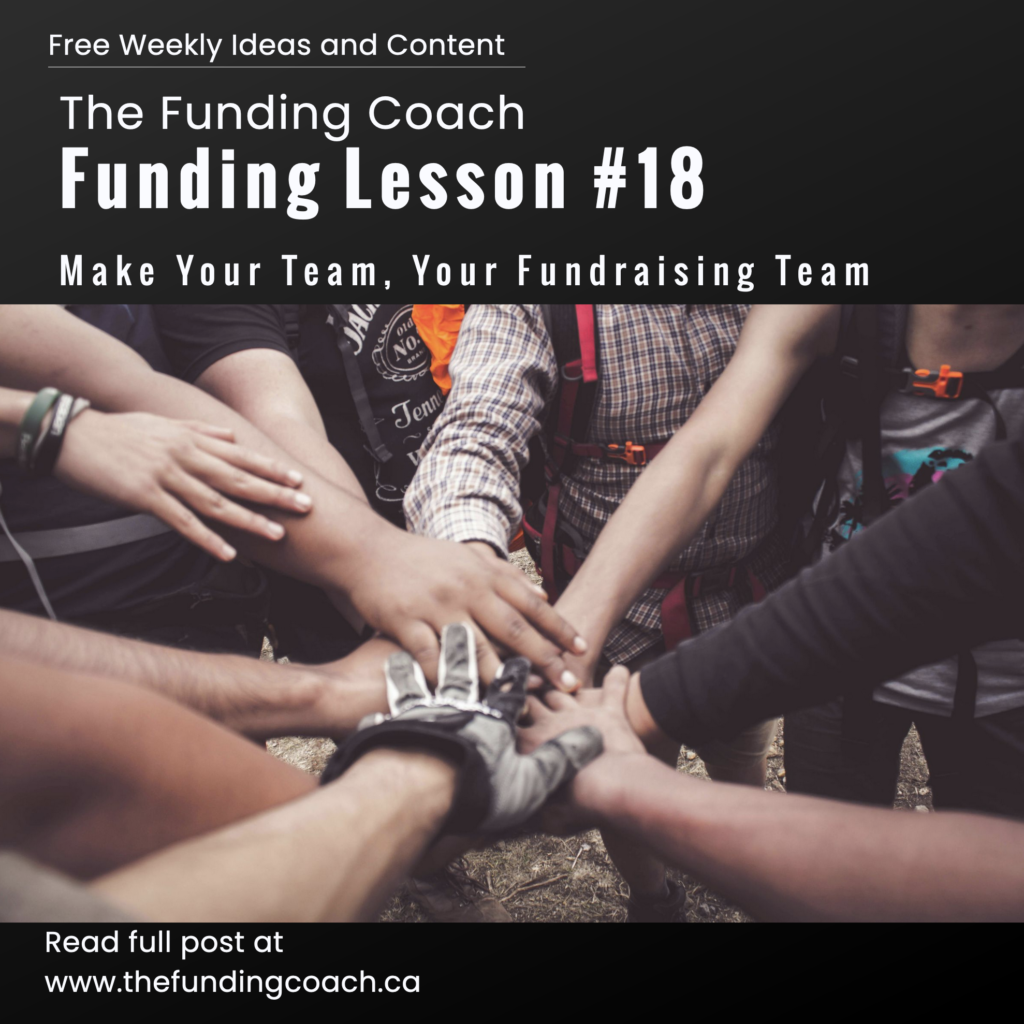
In the world of nonprofits, charities, and faith communities, resources are the lifeblood that fuels our missions. And if you’re here, chances are you’re one of the incredible individuals helping to secure those vital resources.
But here’s the thing: you don’t have to go it alone. While one person may bear more responsibility, the strength lies in building a team.
Let’s face it: most organizations are already a team. From the dedicated board members to the passionate volunteers and generous donors, each person plays a crucial role. Yet, despite having a team, it’s easy to feel overwhelmed and isolated in the quest to raise the funds that keep everything moving.
But fear not! The level of support we receive from our team is within our control. Here’s how you can transform your team into a formidable fundraising force:
 Empowerment through Information: Ensure your team is well-versed in the organization’s mission, the impact it’s making, and the pressing needs that require attention. Equip them with the knowledge of where to direct potential donors and how to engage those eager to help.
 Foster a Culture of Inclusion: By keeping everyone informed on a regular basis, you empower each team member to be an integral part of the fundraising journey. This not only boosts morale but also encourages active participation in initiatives that drive donations and foster a profound sense of belonging and purpose.
Together, let’s turn your team into a fundraising powerhouse!

Collaboration is the cornerstone of community-driven impact. Your donors’ support not only propels your mission forward but also empowers you and your organization to effect meaningful changes worldwide.
While not all donors may seek extensive engagement, some do. Therefore, it’s essential to periodically foster connections and opportunities for feedback. Rather than solely disseminating information about your organization, we encourage dialogue with your donors.
Express to them your genuine appreciation for their input and ideas. These interactions provide invaluable insights into the information donors seek and are willing to engage with. They also unveil their aspirations for change and the impact of their contributions.
Furthermore, such exchanges present opportunities to explore how donors can play a more active role in the future. Understanding their skill sets and potential contributions enriches your collaborative efforts.
Ultimately, this approach fosters stronger connections with donors, cultivates a sense of appreciation, and integrates them as valuable members of our team. Let’s initiate conversations that inspire transformation.
Feeling the pressure of meeting budgets, following up leads, and creating impactful events? You’re not alone. But here’s a golden nugget: amidst the chaos, who should you prioritize?
Your current donors.
Yep, those wonderful folks who already believe in your cause. Here’s why they’re your fundraising superheroes:
Donor Retention: It’s easier to keep a donor than to constantly chase new ones. Focus on nurturing these relationships for long-term support.
Engagement: Don’t hesitate to inform and challenge your existing donors. They might just surprise you with their willingness to step up for current needs and projects.
Your current and past donors are your secret weapon for sustainable funding. By tapping into this supportive community, you’ll save time and effort while building a solid foundation for your cause.
Remember, success in fundraising isn’t just about chasing new leads. It’s about nurturing the relationships you already have. 
In the hustle of fundraising, it’s easy to get caught up in sharing needs and asking for support. After all, we’re driven by a cause, striving to make a tangible difference in the world. But amidst the challenges, it’s crucial not to overlook the joyous moments that define our journey.
Think about it: What would your community look like if your mission thrived? It’s those glimpses of success, those stories of families finding the support they need, that paint a vivid picture of the world we’re creating together.
Let’s shift the narrative. Yes, the need is real, but so is the impact we’re making. By sharing moments of joy and success, we give our donors and supporters a compelling reason to join us on this journey.
Let’s show them the difference they’re making. Let’s celebrate the victories, big and small, that we achieve together. Because when we infuse joy into our communication, we inspire others to be part of something truly meaningful.
Together, let’s spread the joy of giving.

Securing funding for a non-profit or charity is truly a labor of love. Despite our best efforts, encountering rejection can feel like a heavy blow. It’s disheartening, no doubt, but it’s also a part of the journey.
Each ‘no’ is an opportunity for growth. It might mean refining our presentations, adjusting our methods, or finding a more aligned audience. Yet, even with our utmost dedication and passion, rejection remains inevitable.
However, let’s not lose heart. Your cause won’t resonate with everyone, and that’s okay. The person we’re speaking to might already support numerous worthy causes, or our mission might not align perfectly with their funding objectives. Rejection doesn’t diminish the value of our cause—it simply means we haven’t found the perfect match yet.
Why? Because somewhere out there, someone is searching for precisely what we offer. Your organization holds immense value and significance. And for every ‘no,’ there’s a ‘yes’ waiting to be discovered.
Let’s acknowledge the ‘no’s,’ but let’s not let them define us. They’re not personal; they’re just part of the process. Let’s keep pushing forward, knowing that our next ‘yes’ could be right around the corner.
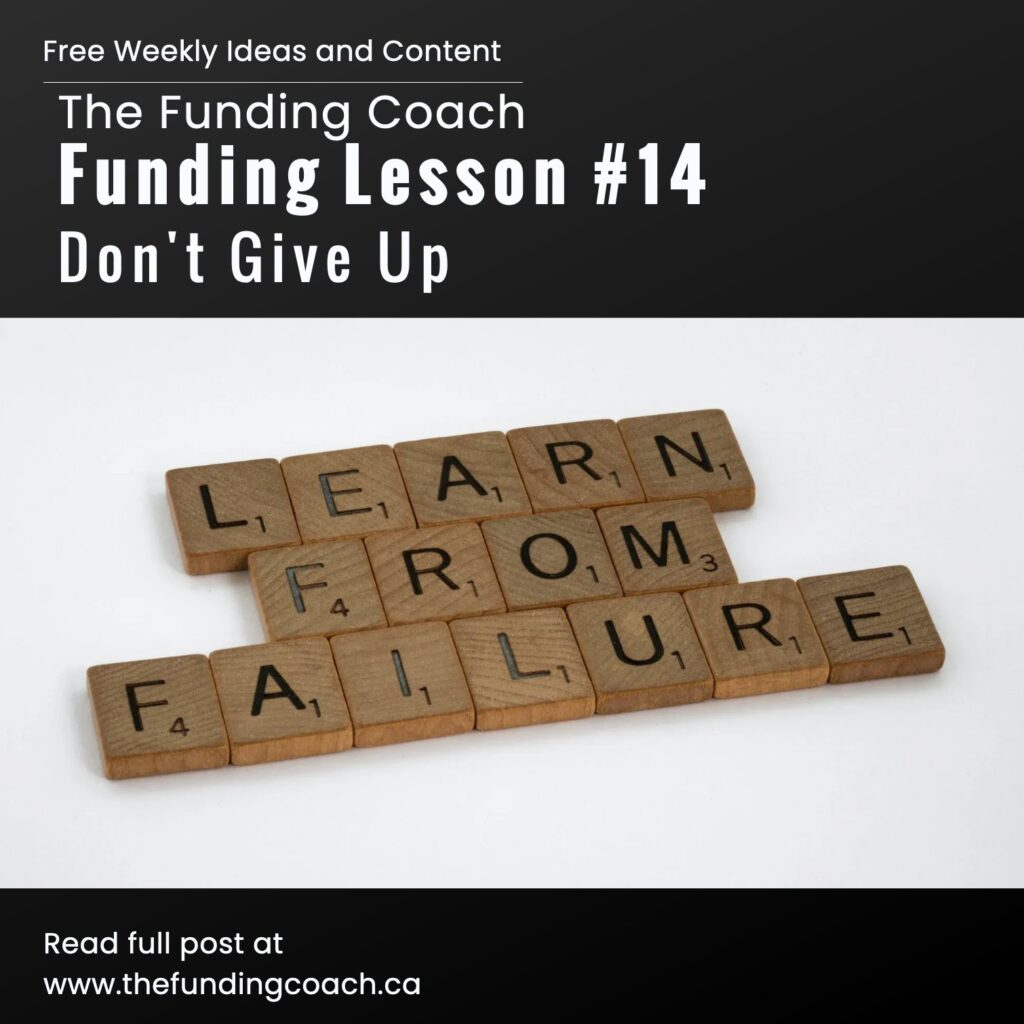

As organizations we understand the power of storytelling. We share tales of resilience, compassion, and transformation – the essence of our collective journey. Yet, there’s another crucial narrative unfolding: YOUR donors’ stories.
Every contribution is more than a transaction; it’s a chapter in their personal story of impact. Your supporters are not just giving; they’re investing in a narrative they couldn’t write alone. The reality is, not everyone can physically be on the front lines, but through their support, they become the unseen heroes of change.
Let’s collaborate in crafting a meaningful narrative for your donors. Help them articulate their unique role in making a difference. From the student receiving education to the community gaining access to vital resources, every story matters.
Here’s the power in it: by aiding your donors in building their story, we amplify the impact of their generosity. Their involvement becomes a part of a collective tale of positive change, a narrative that transcends geographical boundaries.
As we showcase the incredible work of our teams, volunteers, and the lives touched by our mission, let’s shine a spotlight on the silent architects of change – your donors. Together, we’ll weave a tapestry of stories that not only inspires but also ignites a ripple effect of goodwill.
Join us in this narrative-building journey, where every supporter becomes an integral character in the story of global transformation. Their commitment is more than a donation; it’s a testament to the belief that change is possible, one story at a time.

In a world buzzing with automation, let’s not forget the heartbeat of it all – humanity. When was the last time you spoke to a real person, not just a robot voice on a call or an automated response from your bank?
As organizations, it’s easy to fall into the same trap. Generic emails, automated newsletters, and content that lacks the human touch. In a world that often leans towards mechanization, what sets us apart is the warmth of genuine connection.
Being human means seeking connection, wanting to be valued, forming friendships, and more. So, let’s take a step back from the impersonal aspects of promotion, advertising, and automation. Ask yourself, does it feel real?
Let’s make an effort to retain our human touch. Pick up the phone and call your major donors Invite people to witness the impact of what you do firsthand. Personally thank those who make your mission possible. Because, let’s be honest, people appreciate and connect with things that are real.
So here’s to staying true, staying genuine, and keeping it human.
Nurturing Meaningful Relationship

Fundraising for your organization can indeed be an overwhelming journey, with numerous ideas and strategies vying for your attention. Amidst the chaos, a profound truth emerges: “A majority of people only donate to groups they are in a relationship with, know of, or trust.”
This insight is a guiding light, offering the potential to save you valuable time and help you maintain unwavering focus. It underscores the undeniable importance of building and sustaining relationships. While it’s easy to fall into the trap of incessantly asking for donations and promotional activities, the real magic lies in forging connections.
People open their hearts and wallets when they have a personal connection with your cause. It could be because they know you on a personal level, one of your dedicated team members, or because they deeply believe in the passion that drives your organization. At its core, this philosophy reiterates that donors are more than just financial contributors; they are partners in your mission, creating a collaborative effort to uplift your community (see funding lesson #5).
With this in mind, it’s perfectly acceptable for some promotional efforts to be devoid of direct solicitations. In fact, there’s immense value in simply introducing your organization to the world. Who you are, what you do, and why you exist — these are the foundations of trust and understanding. Such promotions serve as the first steps in nurturing relationships.
Beyond mere introductions, successful promotional campaigns can also spotlight stories of passion within your team or share tales of the needs you strive to meet. These narratives evoke empathy and engagement, inspiring individuals to support your cause not merely out of obligation, but because they resonate with your mission and vision.
Additionally, it’s vital to shift your mindset from being solely event or campaign-driven. Instead, focus on getting to know your current donors, those expressing interest, and potential donors. Investing time and effort in building strong relationships with your donors opens the door to their wider circles of influence. These expanded networks bring more support, assistance, and, most importantly, a shared commitment to your organization’s journey.
In conclusion, in the world of fundraising, it’s the heartwarming relationships that you foster that will sustain your organization’s growth and impact. Remember that every connection you make and every relationship you nurture is a step closer to turning your mission into a resounding success.

Several years ago, I had the privilege of joining a panel of esteemed nonprofit directors to address a group of students at one of our local colleges. This event provided a unique platform for students to engage with potential future employers within their local nonprofit landscape.
During my turn to shed light on what a career in the nonprofit sector entailed, I encouraged the students to take a moment to consider the accomplished individuals who had graced the stage before me. It was a reflection I had recently undergone myself, and it became apparent that the most successful long-term nonprofit leaders were some of the finest fundraisers I had ever encountered.
These individuals had honed the vital skills necessary to secure grants, collaborate with various government entities, garner community support, and effectively convey the vision and needs of their respective organizations.
The knowledge I imparted that day was a fundamental truth: if you choose to venture into this field, you must master the art of income generation, or you need to find someone who has.
Lack of funding stands as the paramount reason for nonprofit closures and the inability to fulfill their mission. The overarching mission of the Funding Coach is to guide you and your organization in acquiring the essential skills required to establish and sustain a viable funding strategy.