Fundraising is Opportunity
It shouldn’t just keep you going, it should help you grow.
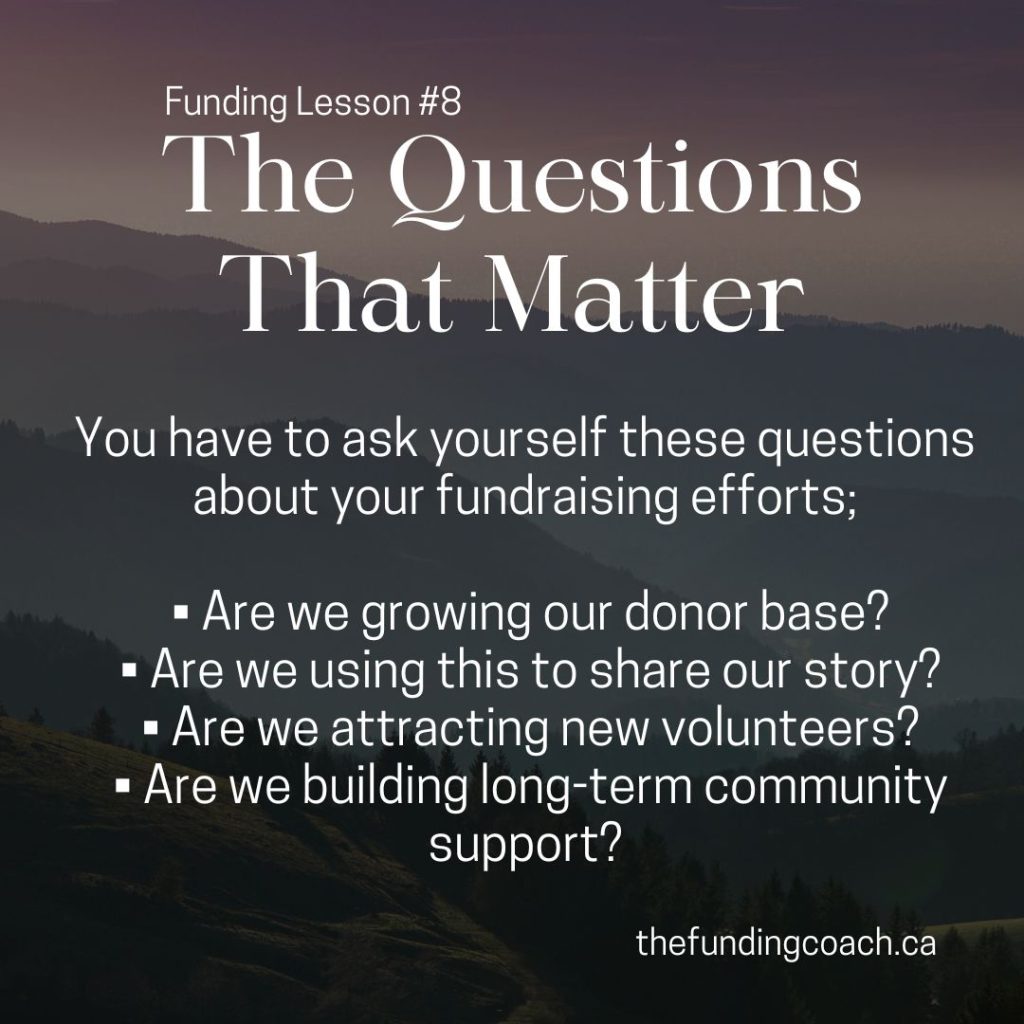

Helping You Serve Your Community Better
You’re responsible for people, programs, and promises.Your funding strategy should protect all three.
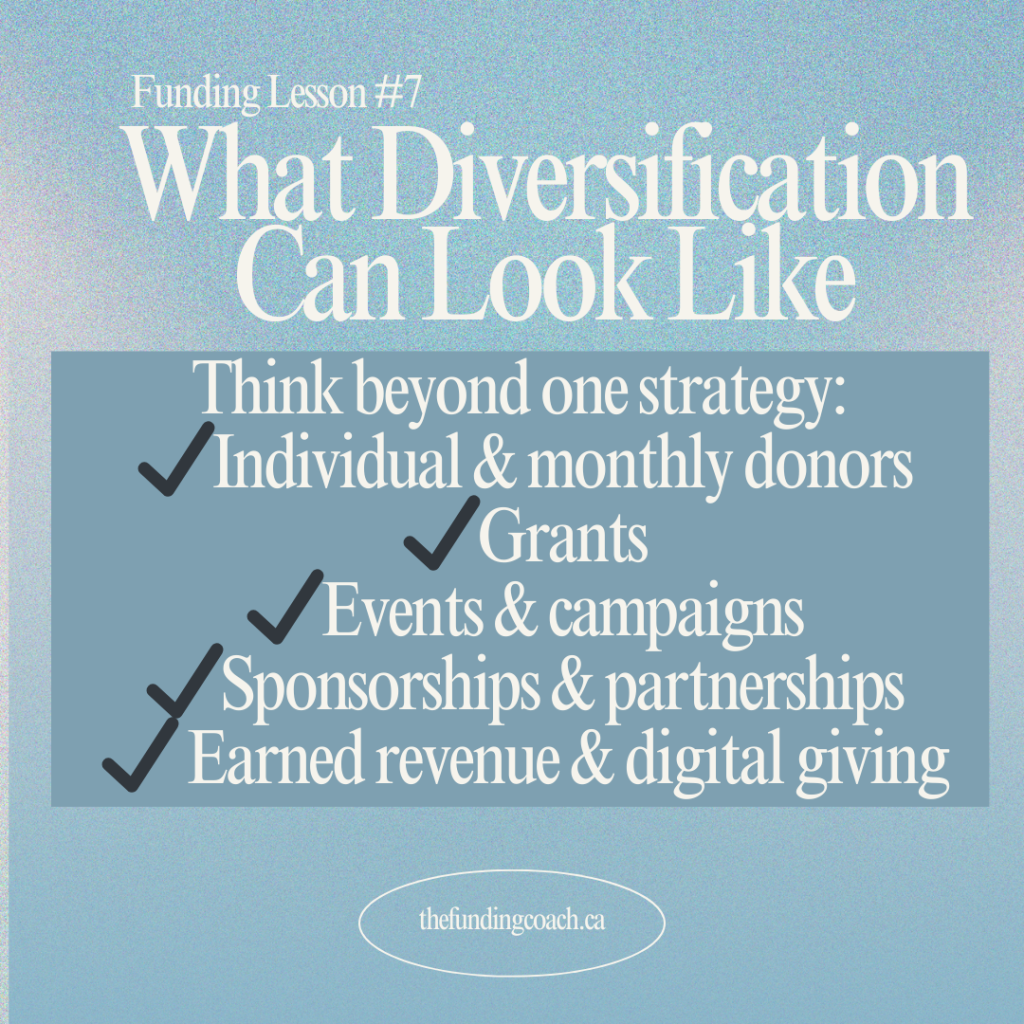
Every nonprofit leader hears this question:
“How can I help?”
Very few are ready to answer it well.
If you want to turn interest into funding, volunteers, and long-term support, it starts with preparation.
#NonprofitLeadership
#FundraisingTips
#NonprofitStrategy
#nonprofit
#funding
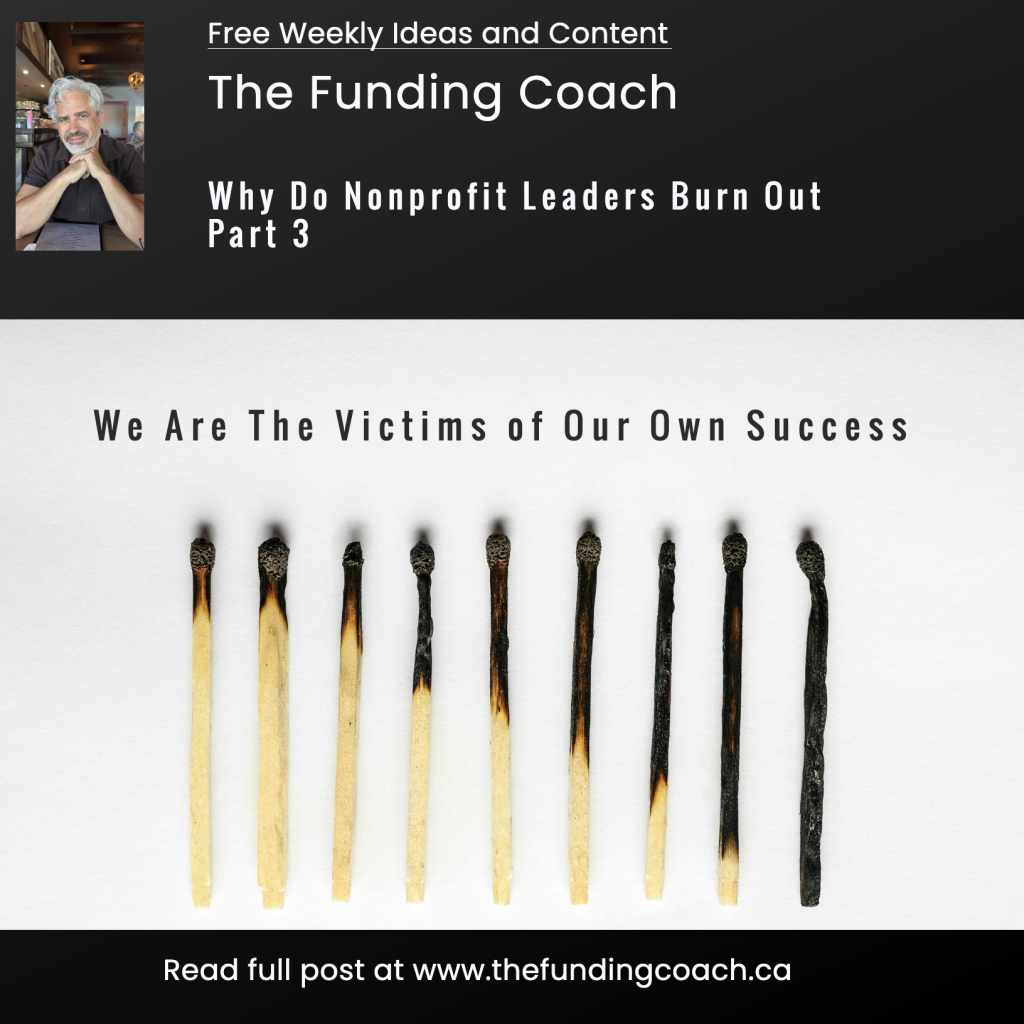
No matter the size of your organization, you may be among the 70% of nonprofit leaders currently experiencing burnout. There are many reasons leaders struggle, yet we often overlook one of the most obvious.
We can easily become victims of our own success. Nonprofit leaders are some of the most creative, committed, and hard-working people, which makes this cycle easier to fall into than you might expect.
In business, as you build a reputation for what you do well, it brings in more clients, and with them, more revenue. In the nonprofit world, as you become known for what you do well, it also brings in more clients, but ‘YOU’ must then find more funding to serve them.
This is the core of the problem: the cycle never ends. The better you are, the bigger the need, the bigger the cost.
Nonprofit leaders tend to be highly compassionate people. That compassion often leads to weak boundaries and difficulty saying no to those in need. Over time, this creates constant pressure to do more, serve more, and stretch further.
Eventually, leaders reach a place where the level of need exceeds their capacity and skill set to fund it. This leads to chronic stress, feelings of failure, and ultimately, burnout.
This is where new skills are required. As needs increase, income generation must change. Boundaries must change. Limits must be set.
These are not easy shifts to make alone. Leaders need space to talk, to share frustrations, and to have someone walk alongside them through the changes that are necessary.
Let’s take some time to talk.

I love people who make things happen.They create systems and organizations to better their community. They feel deeply responsible for the mission. They will do anything to keep things going……Yes almost anything. Sacrifice time, family, health, sanity. This is not sustainable.
In many ways, we become victims of our own success. The better we do at fulfilling our mission, the more the community asks us to help. The need never stops. There is always more to do.
Add to this the growing economic struggles we’re seeing everywhere. The number of individuals and families needing help continues to rise, creating yet another layer of pressure. You know it’s not just about maintaining what you’re doing heading into 2026, you already know you’ll be expected to do more.
The reason you’re in your position is because you care. You want to help. You want to make a difference in the place you serve. People with high levels of compassion often end up working in nonprofits, faith groups, and community organizations.
What makes leading a nonprofit especially stressful is that the most compassionate, community-minded people are often asked to do work they were never trained or equipped to do. Most nonprofit leaders end up becoming fundraisers, or what I call “money entrepreneurs” by necessity, not by choice.
For example, in college I learned how to run youth programs. No one ever taught us how to pay for those programs, how to fund staff positions, cover salaries, or build sustainable funding models.
So here you are. You’re being asked to do something you may have zero training for. You’re being asked to do more of it. And everyone is depending on you.
That’s stress.
And this is a big reason why 95% of nonprofit leaders say burnout is a major concern, and 70% say they are currently experiencing burnout.
This is also why I now help leaders in nonprofits, faith groups, and community organizations develop the skills they need to sustain their work. For over 25 years, I worked in organizations that relied on constant funding, from donors, offerings, grants, and government sources.
I personally carried the weight of raising hundreds of thousands of dollars each year, and millions for large projects. I burned myself out doing it.
What’s changed? I now focus my time on the things that produce the greatest results, and I’ve learned to let a lot of things go.
If all of this sounds way to familiar, I would love to talk with you.
To be a place where you can be encouraged. A place where you can voice your stress. And together, we can discover ways to help your organization thrive, while you get your life back.
Dave
The Funding Coach

You may be. Thinking about starting a new year may feel completely overwhelming.
As of this year, 95% of nonprofit leaders say burnout is a major concern, and 70% say they are currently experiencing burnout. What’s even more concerning is that, despite how high these numbers already are, they continue to rise.
The pressure on nonprofits is growing as community needs increase. People are struggling to afford food, find safe and affordable housing, pay for heat, and cover other essentials. The organizations trying to help are being stretched beyond their capacity.
I want to encourage you: it doesn’t have to stay this way.
Yes, the needs may grow even larger next year, and your organization will still have to navigate how to respond. But with the right strategy and a clear plan, it is possible to reduce stress, lighten workloads, and prevent burnout.
I’ve had the privilege of leading several nonprofits, overseeing building projects, and being actively involved in creating new community centres. That work has been incredibly meaningful and rewarding.
At the same time, it came at a cost. I burned out. Recovery took years. The constant pressure, endless fundraising, ongoing worry, and stress eventually became too much. If you’re feeling this way, you are not alone. In fact, you’re in the majority.
As we head into a new year, I want to invite you to consider making a change. Ask for help. Seek encouragement. Find people you can talk to. Learn how to address your organization’s needs without sacrificing your sanity.
I help nonprofit leaders who are struggling by building long-term funding strategies and clear cases for support. My goal is to make your work easier, reduce pressure on you and your team, lighten your workload, prevent burnout, and help you serve your community more effectively.
If this resonates with you, let’s talk.
Dave
The Funding Coach
www.facebook.com/thefundingcoachonline/
www.thefundingcoach.ca

This is a bold statement, but I can usually tell the long-term viability of a nonprofit within a minute of meeting its director.
Most people look for the common qualities in a leader: their passion, commitment to the mission, and ability to bring in great volunteers and staff. These traits matter. No nonprofit can thrive without them. But here’s the truth most people overlook: those qualities alone don’t determine whether an organization will be sustainable for years to come.
I often talk about perseverance because running a nonprofit takes real work. There are long days, hard choices, and plenty of moments where you’re giving more time and energy than you ever expected. And building the relationships needed for major funding? That can take years, sometimes decades.
Still, even with passion and perseverance, there’s one quality that stands out above the rest when it comes to long-term success.
A few years ago, I spoke at a local college alongside several leaders from major nonprofits in our area. The students asked all the right questions; what we look for when hiring, what skills someone needs to work for or start a nonprofit, and how to prepare for the work ahead.
The panel offered a lot of great insight, but one common thread connected every director on that stage. I’ve worked with most of them over the years and it was evident they all share the same crucial skill: they understand money, what is needed to raise it, not just for the short term, but for the long term.
And this skill is surprisingly easy to overlook. If a director doesn’t have the business or entrepreneurial sense to understand and manage an organization’s financial needs, the nonprofit will almost certainly face serious challenges down the road, or fail completely. This is why it’s so important to have an honest conversation when hiring: Does our director have the business mindset needed to sustain our budget and our mission long-term? If they do not, it can lead to failure of the organization, or burnout of the director.
The good news is that these skills can be learned. Training helps. Coaching helps. Passion may get a nonprofit off the ground, but it’s strong business skills that help it grow, stabilize, and last.
If you’re ready to develop those skills, reach out to the Funding Coach. I’d be happy to help.


If you run a nonprofit, fundraising isn’t optional, it is in the job description. Raising money takes time, energy, and hustle. Let’s be honest: most of that hustle comes in the form of the dreaded ‘fundraiser.’
Car washes, auctions, bake sales, chocolate bars, work-a-thons, and more. The ideas are endless… and exhausting.
So here’s a one idea that most organizations miss: Give your fundraisers away. No, really.
Instead of running every event yourself, what if you encouraged others to do the heavy lifting for you? Imagine asking a business, community group, or even a group of passionate volunteers to organize a fundraiser on your behalf, and then simply hand you the proceeds.
Sounds dreamy, right? It’s also highly doable.
Many businesses already run charitable promotions, or events, so why not position your organization to be on their donation list? Imagine ten businesses, each hosting one event a year in your name. That’s ten fundraisers… without you planning a single one.
Help Them Help You
Get smart: don’t just ask, equip them. Give businesses and supporters a menu of fundraising ideas they can run on their own turf. Think:
-Casual Fridays with a donation jar
-Selling a special product with proceeds going to your cause
-Hosting a themed dance night or trivia night
-Placing a donation box at checkout
You can even encourage your existing supporters, volunteers, staff, and board members to take the idea into their workplaces, churches, book clubs, or community centers.
And the best part? You stay in control of your messaging. Provide flyers, posters, QR codes, and social media graphics. Make it easy for them to tell your story and drive traffic to your website or donation page.
Think Long-Term, Not One-Time
The real jackpot here is consistency. Once someone runs a successful fundraiser for you, ask if they’d consider making it an annual tradition. Becoming a “charity of choice” for a business or group means recurring income without you re-inventing the wheel each year.